

Beijing is positioning itself as the architect of a global AI governance framework, offering developing nations subsidized computing power and open-source models in exchange for influence over the technology's rules.
Beijing is positioning itself as the architect of a global AI governance framework, offering developing nations subsidized computing power and open-source models in exchange for influence over the technology's rules.
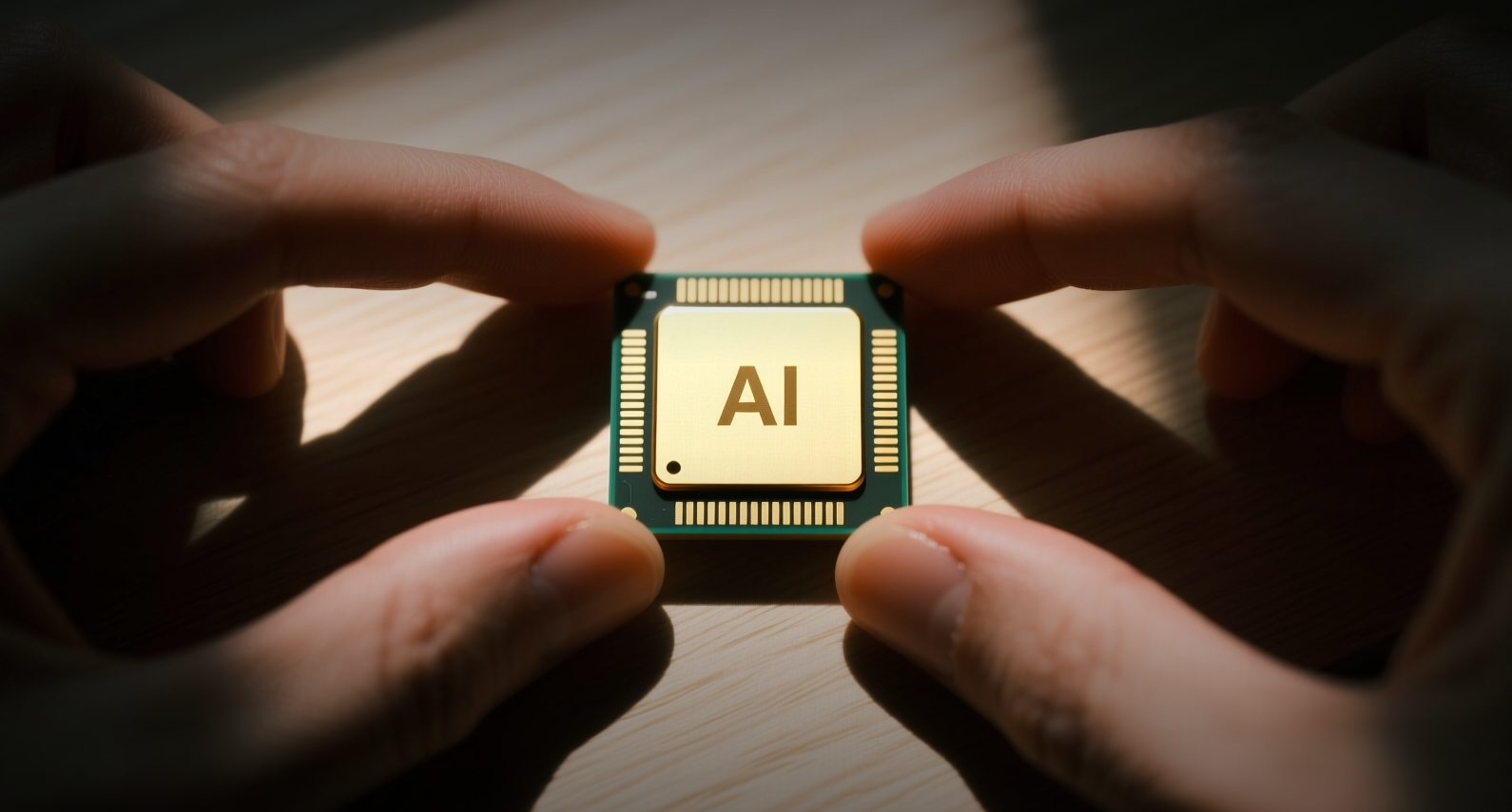
Beijing is positioning itself as the architect of a global AI governance framework, offering developing nations subsidized computing power and open-source models in exchange for influence over the technology's rules.
China's top economic planner published an 8-point action plan on July 17 that commits the country to providing subsidized computing power to developing nations and building shared open-source AI ecosystems, directly challenging the US-led model of export controls and proprietary dominance.
"This is China's most explicit bid yet to define the terms of global AI cooperation — offering infrastructure access as a diplomatic tool while shaping the standards that will govern the technology," said Chen Jing, vice president of the Technology and Strategy Research Institute in Beijing.
The plan, released by the National Development and Reform Commission, covers eight initiatives including cross-border data flows, universal intelligent computing access, open-source ecosystem sharing, joint talent cultivation, and coordinated safety governance. It calls for building cross-border trusted data spaces in select sectors and establishing international AI open-source communities where models, algorithms, and toolkits can be shared. The document also proposes joint development of AI ethics principles centered on "people-centered, AI for good" values.
The announcement comes as 29 countries signed an agreement Thursday in Shanghai to establish the World Artificial Intelligence Cooperation Organization, an intergovernmental body headquartered in the city. Together, the moves signal Beijing's intent to create an alternative governance architecture to Washington's — one where developing nations gain AI access without the export restrictions the US has imposed on advanced chips and models.
The NDRC's plan targets a fundamental tension in the global AI economy: the US controls the most advanced chips and foundation models through export controls on Nvidia's H100 and B200 GPUs and restrictions on model weights, while China offers unrestricted access to its open-source alternatives like Alibaba's Qwen and DeepSeek's models. The Economist recently described the notion of "sovereign AI" independent of both powers as a pipe dream, noting that even G7 leaders hosted OpenAI's Sam Altman, Google DeepMind's Demis Hassabis, and Anthropic's Dario Amodei at their summit last month.
Computing Power as a Diplomatic Tool
The plan's second initiative — "Intelligent Computing Power for All" — is the most consequential. It commits China to connecting computing infrastructure across borders and providing subsidized services to developing nations. This directly counters the US-led CHIPS Act framework, which restricts advanced semiconductor exports. China's approach mirrors its Belt and Road strategy: infrastructure investment in exchange for alignment on standards and governance.
At the World AI Conference in Shanghai, which opens Friday with more than 1,100 companies and 3,000 exhibits, Huawei is debuting its Atlas 950 supernode — the industry's largest commercial system, scaling to 8,192 NPUs for training trillion-parameter models. The system is designed for markets where US export controls limit access to Nvidia's highest-end hardware.
Open Source as a Strategic Bet
The third initiative calls for shared open-source communities where countries can adapt Chinese models for local use. This builds on China's existing open-source strategy — Alibaba's Qwen 2.5 and DeepSeek's V3 have been downloaded millions of times via Hugging Face, and the government now wants to formalize this into a multilateral framework with shared safety standards.
The plan also addresses the AI talent gap, proposing joint training programs between universities, research institutes, and companies across borders. It calls for standardized skills certification systems and attention to AI's impact on employment — a concern that has grown as automation accelerates in manufacturing and services.
For investors, the plan creates a clear bifurcation. Chinese AI infrastructure companies — Huawei, Cambricon, and cloud providers like Alibaba Cloud and Baidu AI Cloud — stand to benefit from increased government procurement and international demand for alternative computing stacks. Nvidia faces the risk that China's subsidized ecosystem accelerates adoption of non-Nvidia hardware in emerging markets, eroding its estimated 80% data center GPU market share. Nvidia shares, trading at about 35 times forward earnings, have already priced in export control headwinds; a successful Chinese alternative could compress that multiple further.
The broader implication is that AI governance is becoming a proxy for geopolitical alignment. Countries that accept China's framework gain access to subsidized computing and open models. Those that align with the US get cutting-edge hardware but face supply chain restrictions. The NDRC's plan makes this choice explicit — and puts a price tag on each option.
This article is for informational purposes only and does not constitute investment advice.
