Cerebras Systems is bringing its wafer-scale AI infrastructure to Europe, betting that local compute demand will justify a 200MW build-out across France and the Nordics.
Cerebras Systems plans to deploy 200MW of AI compute capacity across France and the Nordics by end-2027, bringing its wafer-scale inference infrastructure closer to European customers seeking alternatives to US-concentrated cloud capacity. The company's first European data center will come online by end-2026.
"We are contracting significant capacity for 2027, with data centers slated for Norway and Finland as we actively build across Europe," Chief Executive Officer Andrew Feldman said at the RAISE Summit in Paris. "Our customers don't just want AI compute. They want it close to home, powered responsibly, and available fast."
A portion of the 200MW capacity is expected to support workloads from OpenAI as part of the companies' existing partnership, according to Cerebras. The build-out positions the company to compete directly with Nvidia, whose H100 and B200 GPUs dominate AI inference in US-based cloud regions operated by Amazon Web Services, Microsoft Azure and Google Cloud.
The expansion targets a market gap: European enterprises, research institutions and governments increasingly demand low-latency AI compute hosted within the region rather than routing data to US or Asian data centers. For Cerebras, which trades on Nasdaq under the ticker CBRS, the European build-out represents its largest geographic bet outside North America and a test of whether its wafer-scale architecture can capture share from Nvidia's estimated $62 billion data center GPU business.
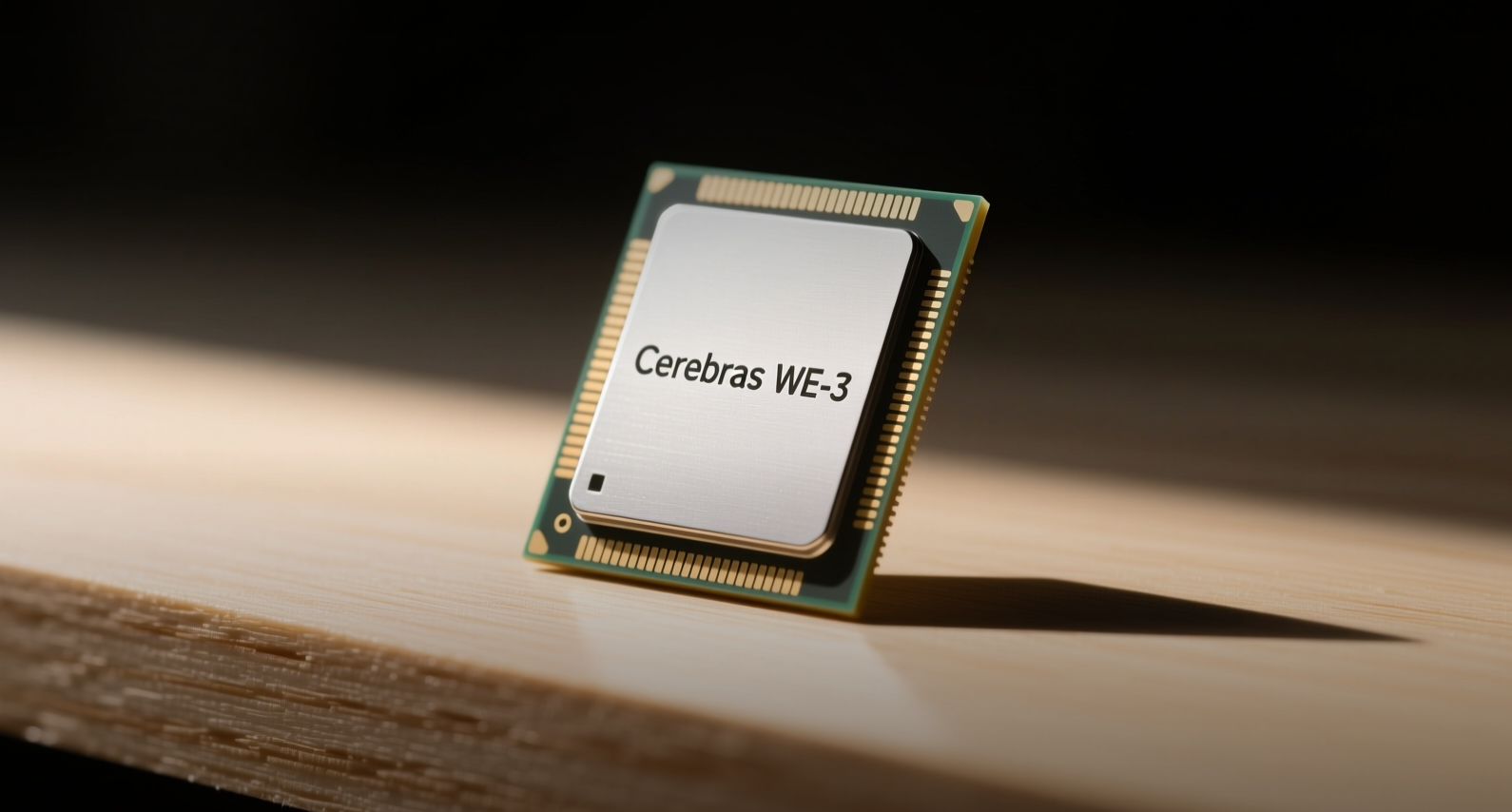
Cerebras' wafer-scale engine, the WSE-3, delivers 125 petaflops of AI compute on a single chip — roughly 52 times the die size of Nvidia's H100. The architecture is designed to minimize memory bandwidth bottlenecks that slow inference on large language models, a key selling point as AI workloads shift from training toward real-time inference. Nvidia's H100 delivers 990 TFLOPS FP16 per GPU, but Cerebras says its approach eliminates the need to split models across hundreds of discrete GPUs, reducing latency for complex inference tasks.
Europe's AI Infrastructure Gap
The build-out comes as European regulators push for greater energy transparency in data centers. The European Commission proposed energy efficiency labels for data centers earlier this month, part of a broader push to manage the sector's growing power consumption. AI data center power demand in Europe is projected to grow at a compound annual rate of 25 percent to 30 percent through 2030, according to industry estimates, driven by enterprise adoption of generative AI and sovereign AI initiatives by national governments.
Cerebras' choice of Norway and Finland for data center locations reflects the region's abundant hydropower and relatively cool climate, which reduce both energy costs and cooling requirements — a meaningful advantage given that power accounts for roughly 40 percent of a data center's operating expenses. The company did not disclose the total capital expenditure for the European build-out or the specific power purchase agreements underpinning the 200MW target.
Competitive Stakes for Investors
The European expansion pits Cerebras against not only Nvidia but also AMD, whose MI300X accelerator has gained traction among European research institutions, and cloud hyperscalers building their own custom silicon. Amazon's Trainium2 chips are already deployed in AWS European regions, while Google's TPU v5p powers AI workloads in its London and Frankfurt zones.
For investors, the key question is whether Cerebras can convert its technology advantage — faster inference per watt, according to the company's published benchmarks — into commercial contracts that justify its valuation. Cerebras trades at roughly 18 times forward sales, a premium to Nvidia's 12 times but below AMD's 22 times, reflecting market uncertainty about its ability to scale beyond its existing customer base. The OpenAI partnership provides a marquee reference but also concentrates customer risk.
This article is for informational purposes only and does not constitute investment advice.