

Michael Burry says the AI data center buildout is repeating 2008's structural excesses, with $500 billion in circular financing at the center.
Michael Burry says the AI data center buildout is repeating 2008's structural excesses, with $500 billion in circular financing at the center.
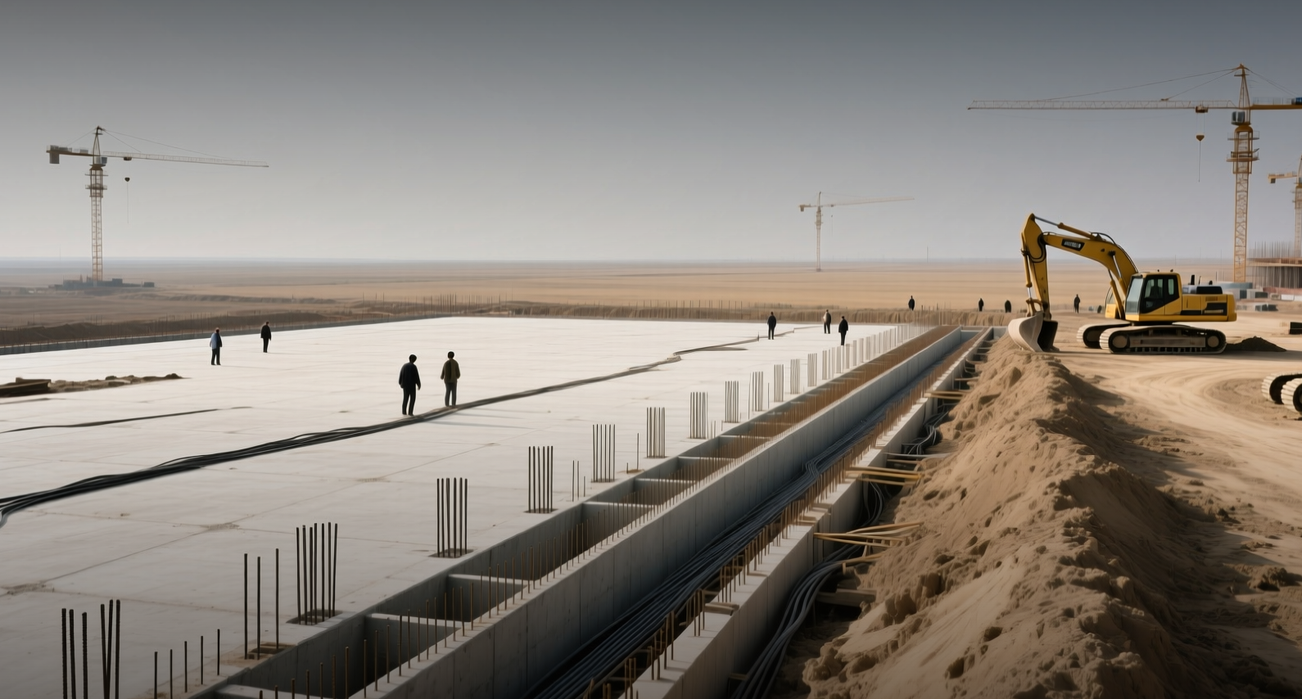
Michael Burry says the AI data center buildout is repeating 2008's structural excesses, with $500 billion in circular financing at the center.
Michael Burry warned Friday that the AI data center boom mirrors 2008's structural excesses, with circular financing and off-balance-sheet vehicles building hidden leverage across the sector.
"The shenanigans are apparent today for those that care to look," Burry wrote in a Substack post under the handle "Cassandra Unchained," where he publishes market commentary after deregistering his hedge fund Scion Asset Management in 2025.
Burry's central charge targets Nvidia's $500 billion AI funding arrangement with six Wall Street firms — Apollo, BlackRock, Blackstone, Brookfield, Goldman Sachs and KKR. He contends the deal functions more as a public relations exercise than a sound investment transaction, with future revenues "majority financed in a circular arrangement" rather than driven by organic end-user demand. Nvidia's five-year credit default swap spread has spiked as concerns over AI infrastructure costs mount.
The warning extends beyond Nvidia. Private non-residential construction excluding data centers fell 7.9 percent year over year in June, while data center construction accelerated despite the Federal Reserve's rate-hiking cycle that began in 2022. "GDP growth is really counting on that data center buildout," Burry wrote, arguing the economy has become dangerously dependent on a single investment category.
Burry's critique centers on the structure of these arrangements. He contends that much of Nvidia's demand is financed through vehicles that keep obligations off buyers' balance sheets, with special-purpose vehicles and captive insurers absorbing risky debt away from public view. The Enron comparison, while not alleging identical fraud, points to a structural parallel: in the late 1990s, Enron used off-balance-sheet entities and deceptive financial engineering to conceal billions in debt before collapsing.
The pattern shows up across the AI supply chain. Oracle disclosed remaining performance obligations of $638 billion in its Q4 FY26 report, with $75 billion tied to bring-your-own-hardware or prepaid customer arrangements. The company also plans to raise $40 billion in debt and equity in fiscal 2027 to fund a $70 billion capex program. Nebius Group's capital stack — including Nvidia pre-funded warrants, convertible debt and uncommenced lease obligations — reflects the intertwined arrangements Burry says obscure true leverage.
Nvidia's own disclosures illustrate the scale. The chipmaker reported Q1 FY27 revenue of $82 billion, with total supply commitments and prepaids reaching $145 billion. CEO Jensen Huang said on the earnings call that "demand has gone parabolic."
Burry anchored his argument to a chart from Torsten Slok, Apollo's chief economist, showing data center construction accelerating even after the Fed began raising rates in 2022 while rate-sensitive segments like office construction contracted. Slok reads that resilience as evidence investors expect AI returns to justify the cost of capital. Burry treats it as a risk indicator.
The divergence is stark. The iShares Semiconductor ETF was up 74 percent year to date through Thursday's close, and Micron stock gained 242 percent over the same stretch on HBM4 memory shipments. Palantir trades at 148.68 times trailing earnings and 67.91 times sales — valuations that leave little room for a growth stumble.
Burry has positioned against several AI infrastructure beneficiaries, including Micron, Oracle, Nebius, Palantir and Tesla. Nvidia shares fell 0.9 percent to $214.87 in Friday midday trading, extending a six-session losing streak, while Oracle rose 3 percent to $146.81 and Palantir climbed 4 percent to $180.20 in a session shrugging off the Substack post.
For investors, the question Burry raises centers on whether the AI boom reflects genuine technological transformation or financial engineering. Demand driven by circular arrangements between related parties may prove less durable than demand from end customers with independent budgets and clear return requirements. Bloomberg has previously reported on the practice, noting that capital increasingly circulates among a small group of major American companies, creating interdependencies that could amplify stress in a downturn.
Nvidia has not publicly responded to Burry's specific allegations regarding the $500 billion funding deal.
This article is for informational purposes only and does not constitute investment advice.
