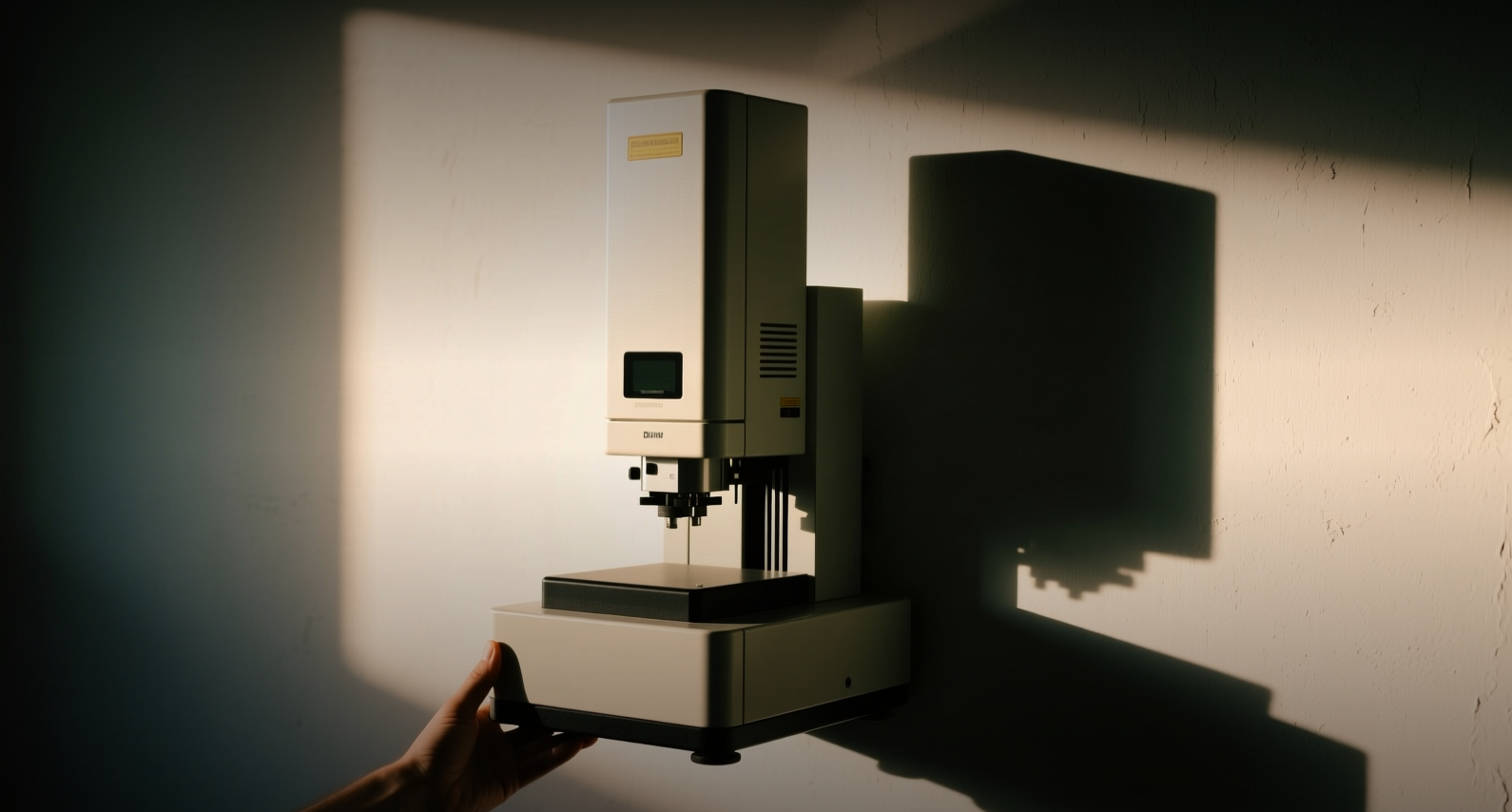
A state-backed Chinese enterprise has started mass-producing immersion DUV lithography equipment, sending ASML shares down more than 7% and raising questions about the Dutch company's last remaining revenue stream in China.
The development, first reported by The Information on Monday, marks the first time a Chinese company has achieved domestic mass production of immersion deep ultraviolet (DUV) lithography systems — the most advanced chipmaking tools available to Chinese manufacturers under current US and Dutch export restrictions. ASML's stock reversed a 2% pre-market gain to close sharply lower, while US equipment makers Applied Materials, Lam Research, and KLA Corp fell roughly 5%, 7%, and 4%, respectively.
"The domestic DUV breakthrough threatens ASML's biggest remaining China revenue stream just as US and Dutch export controls tighten further," said Rachel Kim, a semiconductor supply chain analyst at Edgen. "If domestic supply scales, ASML's China backlog and pricing power compress over time."
The Shanghai-based manufacturer, whose identity remains undisclosed due to the sensitivity of the project, plans to deliver approximately five immersion DUV machines this year, expanding to about 20 units by 2027, according to people familiar with the matter. Potential customers include Semiconductor Manufacturing International Corp. (SMIC), Hua Hong Semiconductor, and ChangXin Memory Technologies (CXMT), which made a blockbuster public debut in China on Monday with shares surging more than fivefold.
Why China's DUV push threatens ASML's China business
Lithography systems are the most technically challenging equipment in semiconductor manufacturing, printing intricate circuit patterns onto silicon wafers. ASML dominates the global market and remains the sole supplier of extreme ultraviolet (EUV) lithography machines used for the most advanced chips. After US and Dutch export controls barred ASML from selling EUV systems to China, Chinese chipmakers stockpiled the company's older-generation immersion DUV tools, turning those sales into a critical revenue source.
ASML's second-quarter results showed China accounted for 14% of net systems revenue, down from 19% in the first quarter. Chief Financial Officer R.J.M. Dassen had previously guided that China would contribute approximately 20% of annual net sales — guidance that now faces significant uncertainty.
The Chinese-manufactured DUV systems remain in early development and still trail ASML's machines in performance and reliability, according to the report. The technology requires further testing before large-scale commercial deployment. China's EUV development lags even further behind, remaining at the prototype stage with a multi-year timeline before commercial viability.
Ripple effects across the semiconductor equipment supply chain
The selloff extended beyond ASML because investors interpreted the breakthrough as a broader threat to the global semiconductor equipment industry. Applied Materials, Lam Research, and KLA Corp provide tools for complementary chipmaking processes — material deposition, pattern etching, and defect inspection. If China succeeds in developing competitive lithography systems, market participants worry the remaining supply chain elements could follow.
The timing coincides with Washington's push for additional restrictions. The US Congress is advancing the MATCH Act, bipartisan legislation designed to further limit China's ability to purchase or maintain advanced DUV equipment from foreign suppliers. If Chinese manufacturers can now produce these machines domestically, such restrictions may prove less effective than originally intended.
For Beijing, developing homegrown lithography equipment has been a strategic priority since 2002, and the effort accelerated after Washington tightened export restrictions in 2022. While China's domestic DUV output remains negligible compared with ASML's production capacity, the trajectory is unmistakable: the country is reducing its reliance on foreign chipmaking tools, one machine at a time.
ASML shares trade at roughly 28 times forward earnings. The company's China exposure — combined with the risk that domestic alternatives gradually erode its DUV pricing power — represents a structural overhang that Monday's selloff only begins to price in. For US equipment makers, the key risk is whether China's localization push expands beyond lithography into deposition, etch, and inspection tools fast enough to reduce their addressable demand in the region.
This article is for informational purposes only and does not constitute investment advice.