
Key Takeaways: US sanctions on Iran sent the rial to a record low while Asian currencies consolidated as traders weighed escalation risks.
Key Takeaways: US sanctions on Iran sent the rial to a record low while Asian currencies consolidated as traders weighed escalation risks.
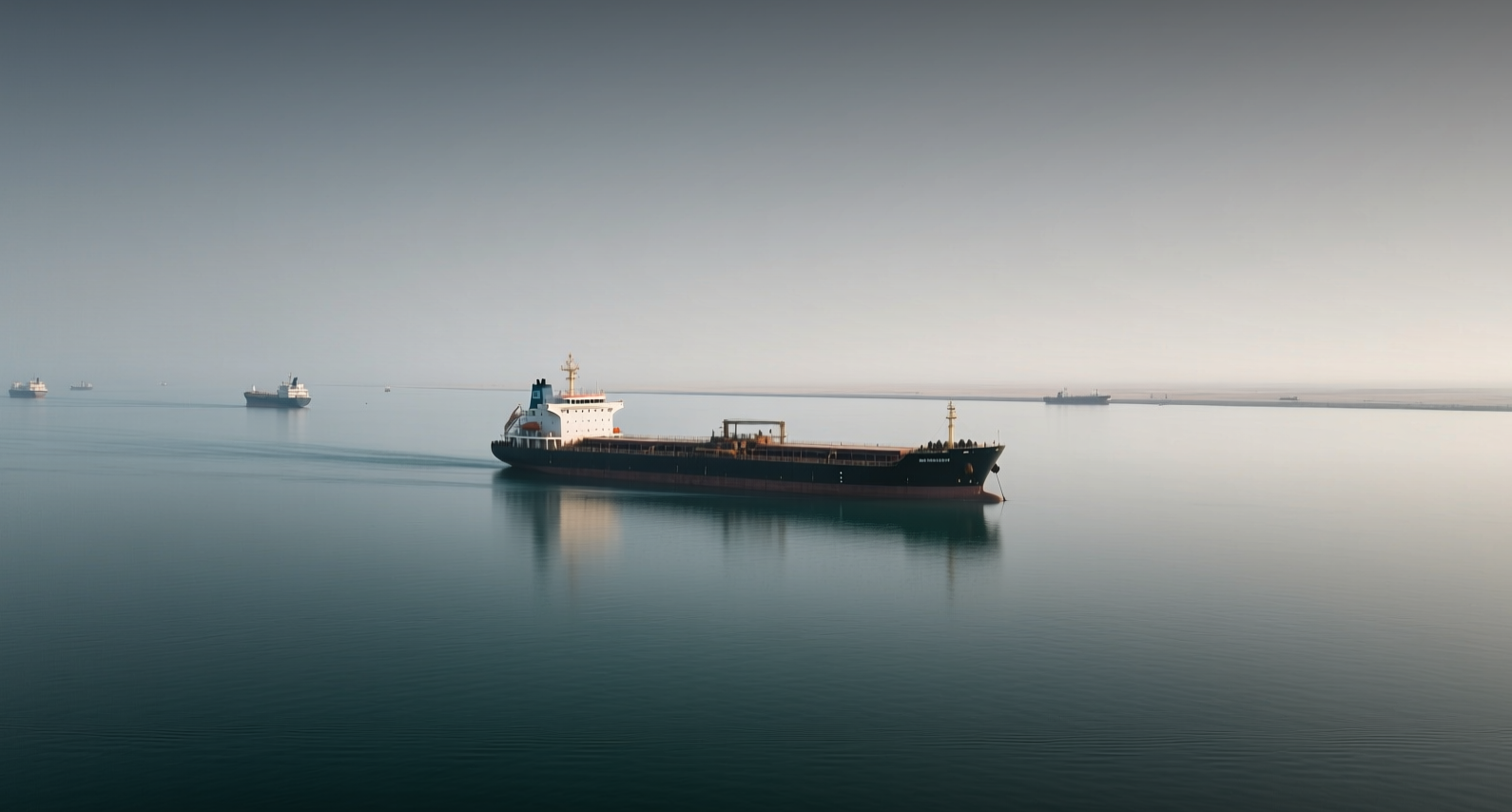
Asian currencies traded in a narrow range Monday as the US unveiled sanctions targeting 60 entities across Iran's aviation, shipping, gold, and digital-asset sectors, sending the rial to a record 2.02 million per dollar.
"Today's sanctions are mostly incremental, but are part of trying to intimidate remaining trading partners into cutting ties [with Iran]," said Rachel Ziemba, adjunct senior fellow at the Center for a New American Security.
The Treasury Department also named Bank Melli, Iran's state-owned bank, saying every branch must be "shuttered and dark" or lose access to the US dollar. Brent crude fell 2 percent to $85.22 a barrel after two weeks of gains, while gold rose 0.8 percent to $4,639.49 an ounce. On Wall Street, the Nasdaq slipped 0.5 percent and the S&P 500 fell 0.2 percent, while the Dow edged up 0.2 percent. Energy stocks led declines, with BP down 2 percent and Shell off 0.2 percent.
The sanctions mark the latest escalation in a six-month war that began Feb. 28 when US and Israeli strikes killed Supreme Leader Ayatollah Ali Khamenei. A memorandum of understanding signed in June gave both sides 60 days to negotiate an end to the conflict, but that period expired Aug. 17 with no deal. Iran has effectively closed the Strait of Hormuz, through which one-fifth of global oil transited before the war, and has threatened to halt all oil exports from the Persian Gulf if the "economic war" continues.
The sanctions package, which Treasury Secretary Scott Bessent described as "the single greatest financial offensive ever marshaled against an adversary," also targets Iran's cryptocurrency use, which the Treasury alleges has been used to circumvent sanctions and facilitate transactions involving the Islamic Revolutionary Guard Corps. Washington suspended broad exceptions covering academic exchanges, personal money transfers, and certain sporting activities, giving organizations until Sept. 8 to wind down operations.
Iran's Foreign Ministry spokesperson Esmail Baghaei warned that Tehran would respond harshly, saying "our hands are not tied." Mohsen Rezaei, secretary of Iran's Supreme National Security Council, said any country supporting the US measures would be regarded as an enemy and that Iran would "retaliate in a seismic manner" by targeting oil-shipping routes from the Persian Gulf.
The rial's collapse compounds an already severe economic crisis. The International Monetary Fund projects Iran's average annual inflation rate will reach 68.9 percent in 2026, and the Foundation for Defense of Democracies estimates Iran is incurring economic damages of about $435 million per day while enforcing its blockade of the Strait.
China, which buys roughly 90 percent of Iran's crude oil exports at 1.4 million barrels per day, said it was monitoring developments closely and would protect its rights. The UAE, Iran's largest source of imports, already suspended all trade with Tehran last week.
Trita Parsi, executive vice president at the Quincy Institute for Responsible Statecraft, said the escalation is unlikely to produce the policy change Washington seeks. "Iran has been under US sanctions for the last 40 years, and we've had several moments in which we have done some sort of a major escalation," he said. "Each time, it has failed to translate into a policy change from Iran."
Parsi noted that neither Bessent nor Trump has outlined specific demands for Iran, focusing instead on maximum isolation. "What we know of the pattern in the past is that the Iranians will not capitulate—they will escalate," he said. "This is the same miscalculation Trump made when he thought that the threat of war would cause them to surrender."
The last time Washington imposed a similarly broad sanctions regime on Iran was after Trump withdrew from the nuclear deal in 2018, triggering a period of maximum pressure that pushed the rial from about 42,000 to over 150,000 per dollar within two years but failed to force a new agreement.
Pakistan's army chief was expected to travel to Tehran on Monday as part of efforts to revive diplomatic talks, while Oman's foreign minister is set to meet his Iranian counterpart on Tuesday to continue discussions on the Strait of Hormuz. Iran has held separate talks with Oman on jointly managing the waterway regardless of whether a new deal is brokered with the US.
For American consumers, the stakes are immediate. The average US petrol price has risen to $4.09 a gallon from $2.98 on Feb. 28, according to AAA. If Iran retaliates against Gulf shipping, "Americans could feel it very quickly through gasoline, diesel, airfares, freight costs and ultimately inflation," said John Deal, managing director of capital markets at Post Oak Group.
The economy and Iran are emerging as key issues heading into the US midterm elections, with only about a third of Americans supporting the war, according to a late-July Reuters/Ipsos poll.
This article is for informational purposes only and does not constitute investment advice.
