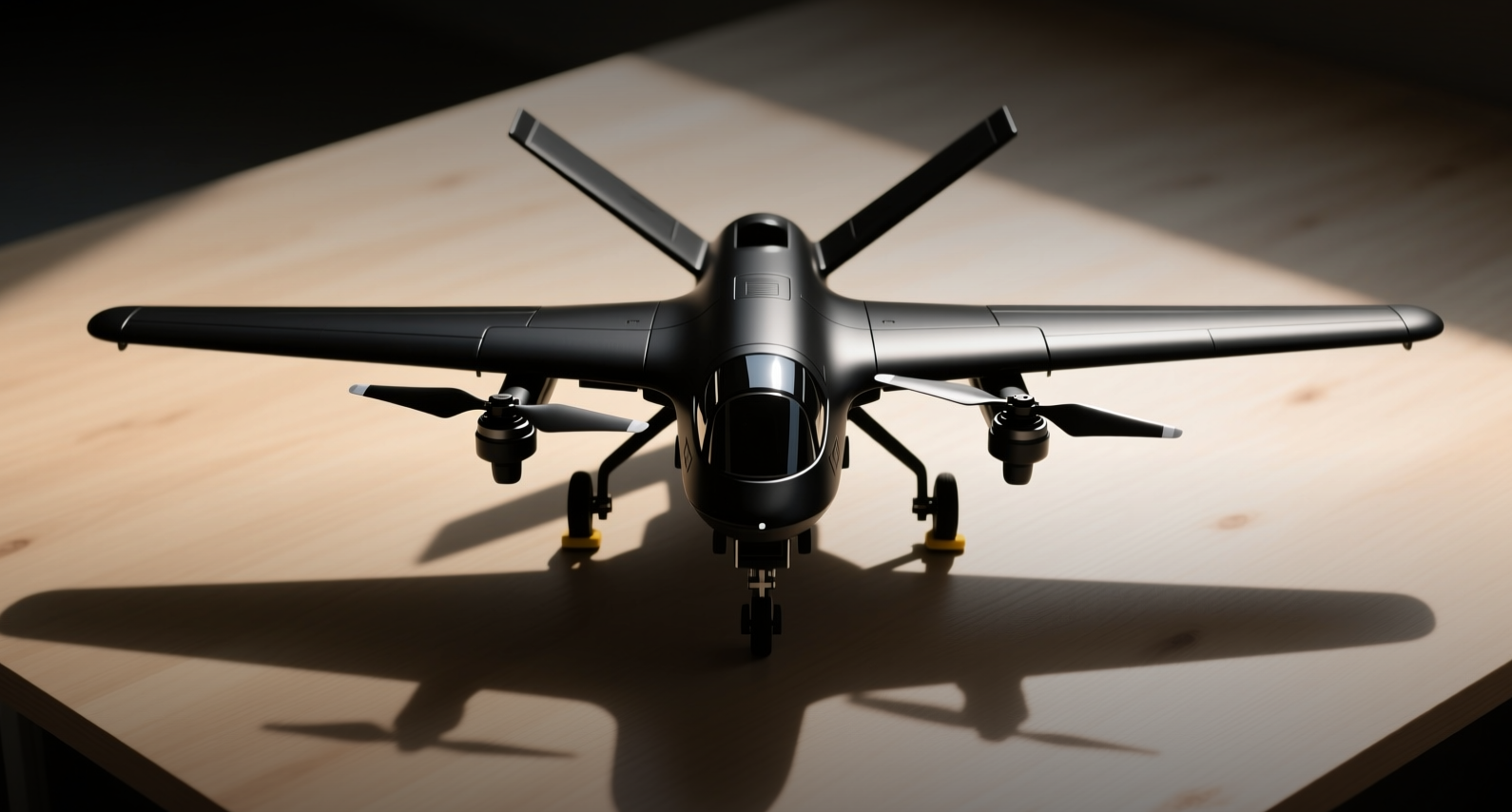
Archer Aviation and Anduril Industries unveiled a hybrid-electric autonomous military aircraft at the Farnborough Airshow, sending shares up 18% as the eVTOL maker expands beyond urban air mobility.
Archer Aviation Inc. surged more than 18% on Monday after unveiling a hybrid-electric autonomous military aircraft developed with Anduril Industries, marking the eVTOL maker's push into defense contracting as the air taxi market develops slower than expected.
"The Thunder design combines optimum-speed tiltrotor technology with a hybrid-electric drivetrain and autonomous control systems to reclaim low-altitude airspace for maneuver forces," Shane Arnott, senior vice president of programs and engineering at Anduril, said at the Farnborough Airshow on July 20.
The Thunder uncrewed aircraft system can carry up to 10 Lockheed Martin AGM-114 Hellfire missiles, 16 launched effects or 75 guided rockets, with a combat range of up to 800 nautical miles. The design incorporates Karem Aircraft's optimum-speed tiltrotor technology, which allows the proprotors to reduce rotational speed by up to 50% for greater cruise efficiency. Anduril has been testing the autonomy software for two years and plans to begin flight testing in 2027. Archer will supply the hybrid-electric powertrain and has rights to market a dual-use version for commercial applications.
The partnership opens a significant revenue stream for Archer beyond the slow-growing urban air mobility market, tapping into the U.S. Army's search for a replacement for the MQ-1C Gray Eagle fleet. The Army held an industry day in March for a Group 4+ short- or vertical-takeoff-and-landing UAS, with General Atomics expected to offer its Mojave derivative. The Thunder represents a throwback to the armed scout mission of the Bell OH-58D Kiowa Warrior, a human-piloted helicopter the Army retired in 2015, and the subsequent Future Attack Reconnaissance Aircraft program canceled in February 2024.
Arnott argued that recent operations, including the 2026 U.S.-led campaign against Iran, proved that high-altitude drones like the MQ-9A Reaper — named the "most valuable aircraft" of that campaign by U.S. Air Force Chief of Staff Gen. Kenneth Wilsbach — are too vulnerable for modern warfare, suffering heavy losses at medium altitudes. "Anyone can see that that type of system, that type of [concept of operation] flying at that level, is just not competitive in the future fight," he said.
Archer shares, which have gained roughly 30% year-to-date, closed at their highest level in three months on Monday. The company has not yet disclosed financial terms of the partnership or the expected production timeline for the Thunder platform.
This article is for informational purposes only and does not constitute investment advice.