
Chinese robotics startup Dexmal is seeking a 20 billion yuan ($3 billion) valuation in an ongoing funding round.
Chinese robotics startup Dexmal is seeking a 20 billion yuan ($3 billion) valuation in an ongoing funding round.
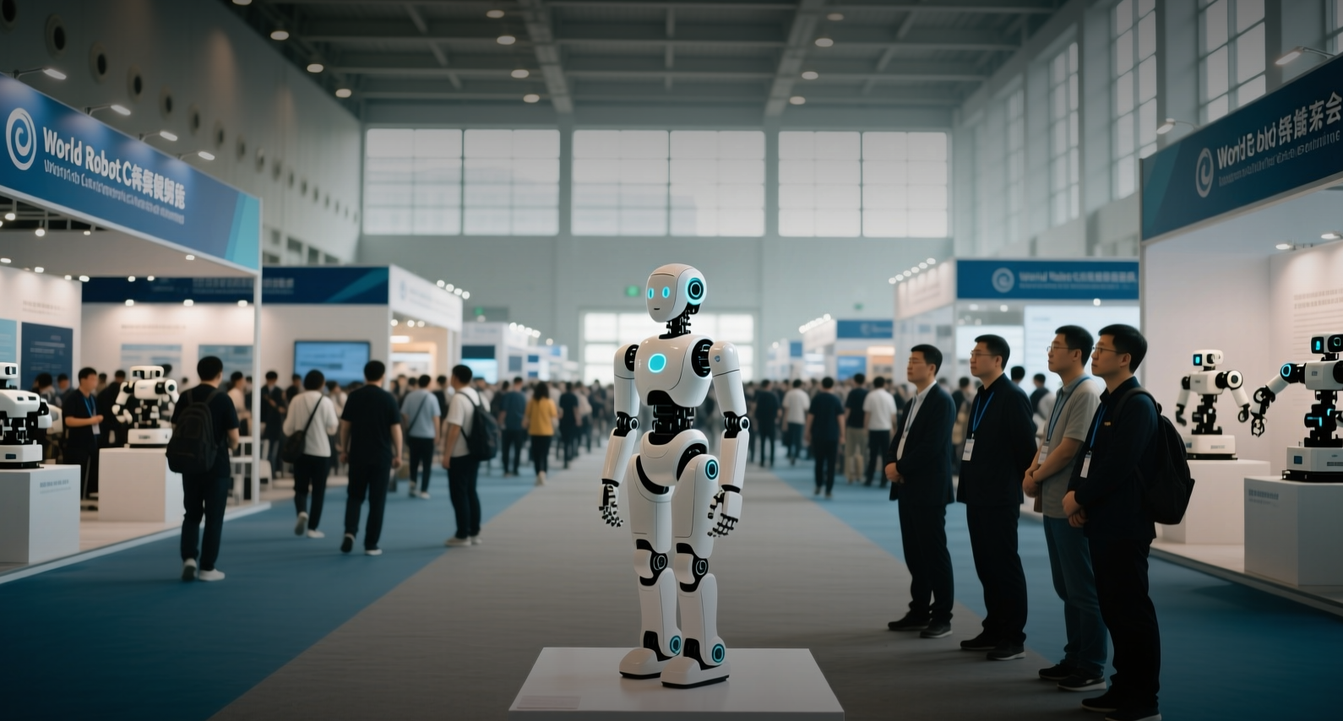
Chinese robotics startup Dexmal is seeking a valuation of about 20 billion yuan ($3 billion) in an ongoing funding round, as investors pour capital into companies chasing breakthroughs in physical artificial intelligence.
"The talks are ongoing," Dexmal founder Tang Wenbin said in an interview at the World Robot Conference in Beijing, where the company displayed its humanoid robots.
The fundraising follows rounds led by Chinese e-commerce giant-turned-AI player Alibaba Group Holding and NIO Capital late last year, and a previous round that included Chinese AI lab Z.AI Co., also known as Zhipu. Dexmal focuses on general embodied intelligence, a field that pairs large language models with physical robots able to perceive and act in the real world.
A 20 billion yuan valuation would place Dexmal among the most valuable private robotics startups in China, a market where Unitree Robotics and UBTech Robotics compete with global players including Tesla's Optimus and Figure AI. The round shows investor appetite for embodied intelligence and could lift sentiment for backers Alibaba and Z.AI, both listed in Hong Kong.
Embodied intelligence has become one of the most heavily funded corners of China's AI sector, drawing money from tech giants and state-backed funds alike. The field aims to give machines the ability to understand and manipulate their surroundings, moving beyond the text-and-image generation that dominated the first wave of generative AI.
Dexmal's valuation target compares with peers that have raised at similar or higher marks. Unitree, the Hangzhou-based maker of quadruped and humanoid robots, was valued at about 12 billion yuan in a 2024 round, while UBTech, listed in Hong Kong, commands a market value of roughly 30 billion yuan. Globally, Figure AI raised $675 million at a $2.6 billion valuation in early 2024, and Tesla has said its Optimus robot will eventually be produced in the millions.
The funding round comes as China's robotics industry accelerates. The World Robot Conference, which runs through Aug. 21 in Beijing, drew more than 700 exhibitors this year, according to organizers, with humanoid robots a centerpiece. Beijing has made embodied intelligence a priority, listing it among emerging industries the government aims to cultivate.
For Alibaba, the investment deepens its push into AI beyond cloud computing and its Qwen large language models. The e-commerce company has backed multiple AI startups as it competes with Tencent and ByteDance for leadership in the technology. Z.AI, one of China's best-funded AI labs, has also expanded beyond chatbots into robotics, betting that embodied intelligence will be a major commercial application. NIO Capital, the venture arm of electric-vehicle maker NIO, brings an automotive angle, where humanoid robots could eventually work alongside humans on assembly lines.
For investors, the round offers a read on how much capital is flowing into embodied intelligence and which companies are winning the backing of China's largest tech firms. Alibaba shares fell 1.7 percent in Hong Kong on Friday, while Z.AI rose 0.6 percent, moves that reflect broader market conditions rather than the Dexmal news. The valuation, if completed, would give Dexmal a multiple that investors will weigh against the still-unproven economics of humanoid robots, which have yet to reach mass production at scale.
This article is for informational purposes only and does not constitute investment advice.
