
Gavin Baker argues the real AI risk is underbuilding, not overbuilding — fewer than 10 million heavy paying users sit behind $80 billion in revenue.
Gavin Baker argues the real AI risk is underbuilding, not overbuilding — fewer than 10 million heavy paying users sit behind $80 billion in revenue.
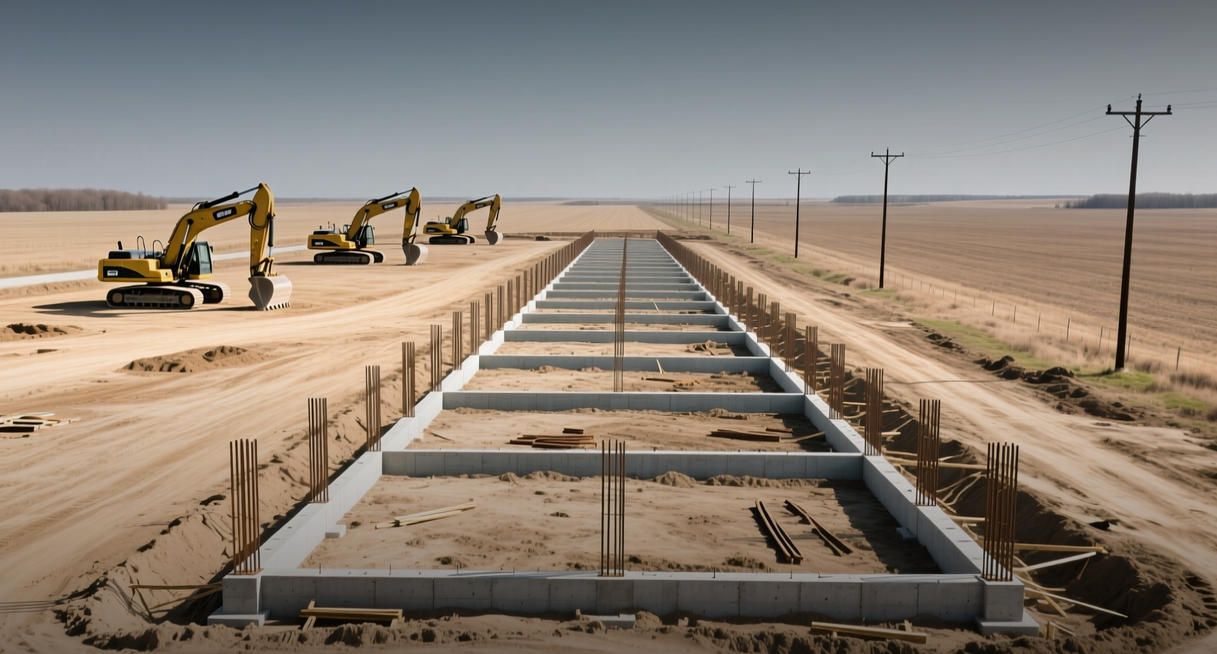
Gavin Baker argues the real AI risk is underbuilding, not overbuilding — fewer than 10 million heavy paying users sit behind $80 billion in revenue.
AI demand is accelerating faster than compute supply can follow, tech investor Gavin Baker said, warning token costs could rise tenfold if data center construction lags a user base still under 10 million.
"Everyone is worried about oversupply. I'm more worried about severe undersupply," Baker, founder of Atreides Management, said on a16z's podcast.
Baker spent the summer asking every industry contact for one deteriorating metric and found none. AI fundamentals accelerated in July and August even as public AI stocks pulled back, he said. OpenAI is accelerating, open-source models faster, and Grok surged after launching Grokbot; Anthropic sits in a pre-IPO quiet period. Behind roughly $80 billion in annual AI revenue sit fewer than 10 million heavy paying users, Baker estimated, against 1.5 billion knowledge workers worldwide.
Atreides' own token consumption grew 100x from March to August, and Baker expects a 10-20x jump within a month from just two Grokbot Enterprise users. If supply stays constrained through 2028, compute economics favor aggressive builders — OpenAI over Microsoft, which slowed an $80 billion capex commitment and now regrets it, Baker said.
Payback Under a Year Draws Capital
Baker said the economics of current compute investment are rare in his career. Bringing 1 gigawatt of compute online costs roughly $50 billion, according to disclosures from Nebius and CoreWeave, with customers able to prepay 50 percent to 60 percent — $25 billion to $30 billion — and the remainder recovering faster in the spot market, putting the overall payback period near nine to 10 months. Nvidia GPUs can be financed at low cost, with Blackstone, KKR and Apollo participating. "In my investing career, there are very few opportunities where companies can deploy tens of billions of dollars and achieve a payback period of under a year," Baker said.
He contrasted Microsoft with OpenAI. Satya Nadella committed $80 billion in capital spending at Davos last year, then slowed down — "now they regret it," Baker said. OpenAI chose aggressive investment, and "the high returns clearly prove that was the right decision, both short-term and long-term."
Data Centers as Reindustrialization
Baker framed the construction wave as a reindustrialization opportunity for the United States. US natural gas prices run $2 to $3 per million BTU against $20 to $25 in Europe and Asia, and electricity is a critical cost for nearly all manufacturing. Loudoun County, Virginia — simultaneously the highest per-capita income county in America and the county with the highest data center density — shows tax revenue growing 10x when a data center arrives, he said. Baker called Meta the best at telling that story and urged the industry, including SpaceX, Anthropic, OpenAI, Google, Nvidia, AMD and Broadcom, to share real case studies. Nvidia CEO Jensen Huang responded that AI is "bringing manufacturing back to America, reindustrializing the country after decades of offshoring."
Baker's thesis runs against the "AI bubble" narrative that drove public AI stocks lower in July and August even as fundamentals accelerated. If supply stays the binding constraint, the winners are compute builders — Nvidia, CoreWeave, Nebius and hyperscalers with capacity — while token costs, not prices, become the pricing signal. David George, the a16z partner, said the shortage could persist through 2028, with political resistance delaying planned construction. "That could ironically create real compute inequality — big companies and wealthy people can afford compute," George said. Baker's reply: "Precisely because they won't let us build data centers."
This article is for informational purposes only and does not constitute investment advice.
