Content
TL;DR
Hyperliquid là gì?
Ai là đội ngũ đứng sau Hyperliquid?
Họ đã huy động được bao nhiêu tiền và ai là những nhà tài trợ?
Giá trị của dự án là bao nhiêu?
Có cơ hội airdrop không?
Làm thế nào để tôi có thể tiếp cận cơ hội airdrop?
Dự báo định giá TGE
Các câu hỏi thường gặp (FAQ)

Markets Confusing? Ask Edgen Search.

Instant answers, zero BS, and trading decisions your future self will thank you for.

Try Search Now

Hyperliquid là gì - Hướng dẫn dành cho người mới bắt đầu

· Mar 31 2026
Hyperliquid là gì - Hướng dẫn dành cho người mới bắt đầu

Tổng quan thân thiện với người mới bắt đầu về Hyperliquid, một dự án cách mạng trong thế giới tiền điện tử đang thay đổi cách mọi người giao dịch bằng cách kết hợp những ưu điểm tốt nhất của các sàn giao dịch truyền thống, tốc độ cao với sự an toàn của một loại blockchain mới. Để tìm hiểu sâu hơn về $HYPE, hãy nhấp vào đây

TL;DR

  • Hyperliquid là một dự án đột phá đã xây dựng một nền tảng giao dịch siêu nhanh ngay trên blockchain của riêng mình, giúp nó vừa nhanh chóng vừa an toàn.
  • Dự án có một hệ thống rất thông minh sử dụng gần như toàn bộ lợi nhuận để mua lại và đốt cháy token của mình, điều này giúp tăng giá trị dự án theo thời gian.
  • Đội ngũ đứng sau dự án bao gồm các chuyên gia có trình độ cao từ thế giới tài chính và công nghệ.
  • Dự báo dự án rất tích cực, với tiềm năng trở thành một nhà lãnh đạo thực sự trong tương lai của tài chính.

Hyperliquid là gì?

Hãy tưởng tượng một nền tảng giao dịch như những nền tảng lớn bạn thấy trên TV, nhưng là một nền tảng hoàn toàn mở và minh bạch. Đó chính là Hyperliquid. Nó không chỉ là một ứng dụng giao dịch; nó là một loại blockchain hoàn toàn mới được xây dựng từ đầu để có tốc độ cực nhanh. Điều này cho phép nó xử lý số lượng giao dịch khổng lồ trong một giây, giống như một sàn giao dịch chứng khoán thông thường, nhưng với tất cả sự an toàn và tự do của tiền điện tử.

Mục tiêu của dự án là tạo ra một "trung tâm tài chính trên chuỗi" nơi mọi thứ đều công khai và bạn có toàn quyền kiểm soát tiền của mình. Đây là một giải pháp thay thế đầy hứa hẹn đã được hàng trăm nghìn nhà giao dịch sử dụng, những người yêu thích tốc độ và giao dịch không phí gas của nó.

Ai là đội ngũ đứng sau Hyperliquid?

Đội ngũ đứng sau Hyperliquid nhỏ nhưng mạnh mẽ. Họ được dẫn dắt bởi một người đồng sáng lập tên là Jeff Yan, người từng làm việc tại một công ty giao dịch tốc độ cao rất độc quyền. Anh ấy có bằng vật lý và khoa học máy tính từ Đại học Harvard. Kinh nghiệm của anh ấy rất phù hợp để xây dựng một hệ thống giao dịch siêu nhanh. Phần còn lại của đội ngũ cũng đến từ các trường học và công ty công nghệ hàng đầu, cho thấy dự án đang nằm trong tay những người rất tài năng.

Họ đã huy động được bao nhiêu tiền và ai là những nhà tài trợ?

Điều thực sự đặc biệt về Hyperliquid là họ đã không nhận tiền từ các công ty đầu tư mạo hiểm lớn ngay từ đầu. Thay vào đó, họ đã sử dụng tiền của riêng mình để xây dựng dự án. Điều này cho phép họ phân bổ một phần lớn token của mình cho cộng đồng.

Tuy nhiên, sự thành công của dự án đã thu hút sự hỗ trợ lớn từ các ông lớn trong thế giới tài chính. Họ đã tìm ra những cách sáng tạo để hỗ trợ dự án, bao gồm thông qua các công ty niêm yết công khai và các công ty đầu tư như Paradigm, Pantera Capital và Galaxy Digital. Điều này cho thấy rằng ngay cả khi không có vòng cấp vốn truyền thống, dự án đã giành được sự tin tưởng của một số tên tuổi đáng kính nhất trong tiền điện tử và tài chính.

Giá trị của dự án là bao nhiêu?

Giá trị của dự án Hyperliquid là một cách để đo lường giá trị mà thị trường nghĩ rằng toàn bộ dự án đáng giá. Đây là một chỉ số quan trọng cho thấy mọi người tin tưởng vào tiềm năng tương lai của dự án đến mức nào. Giá trị của Hyperliquid đã tăng nhanh chóng, cho thấy nền tảng giao dịch nhanh chóng và các nguyên tắc cơ bản mạnh mẽ của nó rất phổ biến. Nó đã trở thành một trong những dự án có giá trị nhất trong lĩnh vực của nó.

Có cơ hội airdrop không?

Có! Mặc dù Hyperliquid đã có một đợt airdrop đầu tiên rất lớn, nhưng họ đã dành một lượng lớn token cho các phần thưởng cộng đồng và airdrop trong tương lai. Điều này có nghĩa là nếu bạn sử dụng nền tảng và là một thành viên cộng đồng tích cực, bạn có thể có cơ hội nhận được token miễn phí trong tương lai.

Làm thế nào để tôi có thể tiếp cận cơ hội airdrop?

Bạn có thể tăng cơ hội nhận airdrop trong tương lai bằng cách trở thành người dùng tích cực của nền tảng Hyperliquid. Đây là những gì bạn có thể làm:

  • Giao dịch: Thực hiện giao dịch trên sàn giao dịch của họ, vì hoạt động giao dịch là một phần quan trọng trong cách họ theo dõi lòng trung thành của người dùng.
  • Cung cấp thanh khoản: Gửi tiền vào các kho tiền đặc biệt của họ giúp cung cấp thanh khoản cho các nhà giao dịch.
  • Luôn tương tác: Theo dõi các kênh truyền thông xã hội và cộng đồng chính thức của họ để cập nhật bất kỳ chương trình hoặc cơ hội mới nào.

Dự báo định giá TGE

Bảng này hiển thị dự báo dự án đơn giản về tổng giá trị của Hyperliquid trong các kịch bản khác nhau trong 6-12 tháng tới.

Kịch bản

Thực hiện

Thị trường

Luận giải & Tường thuật

Phạm vi FDV (Tỷ USD)

Trường hợp tăng giá

Mạnh

Thuận lợi

Tăng trưởng bền vững trong thị trường tiền điện tử tích cực.

~20.0 Tỷ - 28.0 Tỷ USD

Trường hợp cơ bản

Mạnh

Không thuận lợi

Vẫn mạnh mẽ ngay cả khi thị trường gặp khó khăn.

~6.4 Tỷ - 9.6 Tỷ USD

Trường hợp giảm giá

Yếu

Thuận lợi

Tăng trưởng chậm lại mặc dù thị trường tốt.

~4.0 Tỷ - 5.6 Tỷ USD

Trường hợp thảm họa

Yếu

Không thuận lợi

Trì trệ trong một thị trường khắc nghiệt, gặp khó khăn.

~1.6 Tỷ - 3.2 Tỷ USD

Các câu hỏi thường gặp (FAQ)

1. Điều gì làm cho Hyperliquid trở nên đặc biệt?

Hyperliquid đặc biệt vì nó là một trong số rất ít dự án đã xây dựng một sàn giao dịch hoàn toàn trên chuỗi, siêu nhanh. Đây là một thành tựu kỹ thuật to lớn khiến nó trở thành một nhà lãnh đạo thực sự trong lĩnh vực của mình.

2. Dự án có an toàn để sử dụng không?

Hyperliquid đã hoạt động thành công trong một thời gian và được đánh giá cao. Mặc dù tất cả các dự án tiền điện tử đều có một số rủi ro, nhưng đội ngũ rất tập trung vào việc làm cho nền tảng an toàn và đã thực hiện các nâng cấp để bảo vệ người dùng.

3. Token HYPE được sử dụng để làm gì?

Token HYPE là trung tâm của dự án. Nó mang lại cho bạn những lợi ích đặc biệt như giảm phí giao dịch, và nó cũng là thứ mà dự án sử dụng cho chương trình mua lại và đốt cháy của mình, giúp giá dự án và tổng giá trị tăng trưởng.

4. AI có ảnh hưởng đến dự án này không?

AI là một lĩnh vực đang phát triển, và các dự án như Hyperliquid rất tuyệt vời vì chúng có dữ liệu mở. Điều này có nghĩa là các công cụ AI mạnh mẽ một ngày nào đó có thể được xây dựng trên blockchain của Hyperliquid, tạo ra những cơ hội mới thú vị cho dự án trong tương lai.

5. Hyperliquid kiếm tiền bằng cách nào?

Dự án kiếm tiền bằng cách tính phí nhỏ trên các giao dịch. Số tiền này sau đó được đưa trở lại dự án để mua lại và đốt cháy token, đây là một phần rất tích cực và đầy hứa hẹn trong thiết kế của nó.

Recommend
Redeem miles for gift cards and each is worth ~1 cent; redeem for long-haul business and they're worth 2.5-4+. With programs now dynamically priced, the one check that decides every redemption.

How to redeem airline miles without wasting them

The single biggest mistake with miles is redeeming them for the easy stuff: gift cards, merchandise, seat upgrades at the gate. Do that and each mile is worth about one cent. Redeem the *same* miles for flights, especially long-haul or premium-cabin flights, and they're often worth two to five cents each, sometimes more. So the real skill isn't earning miles; it's not throwing away their value at the finish line. Here's how to actually use them. A mile has no fixed price; its value depends entirely on what you redeem it for. The way to judge any redemption is simple math: (cash price of the flight) ÷ (miles it costs) = cents per mile. If a flight costs $400 or 20,000 miles, that's 2 cents a mile, a solid deal. If a $90 flight costs 18,000 miles, that's half a cent, which is terrible; pay cash and keep the miles. Run this check before every redemption. It instantly separates a great use from a waste, and it's the one habit that makes miles worth having. As a rule of thumb, most major ai
Edgen
·
Jun 30 2026
Short-term goals (under ~3 years) belong in safe cash; long-term goals (5+ years) can take market risk. The best HYSAs now pay ~4-5% APY. How to sort yours and run both.

Long-term vs short-term financial goals (and how to plan both)

The difference comes down to one thing: time. A short-term goal is money you'll need within roughly three years (an emergency fund, a trip, a wedding, next year's tax bill), so it has to be *safe and reachable*. A long-term goal is five-plus years out (retirement, a house down the road, a kid's education), so it can take market risk, because time smooths the bumps out. Get that match right and you've done most of the work. It's not the size, it's the deadline. A $2,000 goal you need in six months is short-term; a $2,000 goal you won't touch for fifteen years is long-term, and they belong in completely different places. This is the part that actually matters, and where people lose money without realizing it. Short-term money should not be in the stock market. If your emergency fund is in stocks and the market drops 20% the same month your car dies, you're selling at the worst possible time. Short-term goals go somewhere stable and accessible, and a high-yield savings account is the clas
Edgen
·
Jun 30 2026
Mortgages near 6.5%, home prices flat, and the Fed split on rate cuts vs hikes. With timing a coin flip, the 3 questions that actually decide whether to buy now or wait.

Should you buy a house now or wait? How to actually decide

The honest answer: buy when you'll stay put for at least five years and you'll still have an emergency fund left after the down payment. Otherwise, waiting (and renting) is often the smarter money move, not the weaker one. "Rent vs buy" isn't a math problem with one right answer, and it's almost never really about timing the market. It's about your *life*, in three questions. Before the three questions, here's the mid-2026 backdrop — because "now or wait" usually hides a bet on rates and prices, and the data says that bet is a coin flip. The picture: mortgages are still pricey, prices have gone flat (more than half of the 20 big metros saw year-over-year declines in March), and the cheap-money era hasn't returned. So "buy before it runs away" and "wait for the crash" are *both* weak arguments right now. The whole "wait for rates to drop" plan rests on the Fed, and the Fed is split down the middle. In its June 2026 projections, policymakers were divided: 8 expected no change this year,
Edgen
·
Jun 30 2026
Most financial goals fail because they're wishes, not systems. Here's the 3-part anatomy of a goal that sticks (a number, a date, one automatic move), plus why 37% of adults can't cover a $400 surprise.

How to set financial goals you'll actually hit

A financial goal you'll actually hit has three things a vague wish doesn't: a number, a date, and one automatic move that happens whether or not you remember it. "Save more" is a wish. "$6,000 in a separate account by next December, $500 auto-transferred on payday" is a goal. The gap between those two sentences is the reason most goals quietly die, and it has almost nothing to do with willpower. Key Takeaways A real financial goal answers three questions: how much, by when, and what for. Drop any one and it stops working. "Pay off debt" has no number and no date, so there's nothing to aim at or measure, while "$8,000 of card debt cleared in 18 months" tells you exactly whether you're on track and the day you're done. The "what for" matters more than people expect. A goal tied to something real (a buffer so a bad month isn't a crisis, a deposit on a first place) survives the months when motivation dips. In our experience reading how people actually use a money tool, the goals that get
Edgen
·
Jun 30 2026
A big RSU grant just vested — now what? Here's what a modern money tool actually surfaces first, using Ed as a worked example: a reality check, the 22% tax gap most high earners miss, and the concentration risk nobody flags.

Your RSUs Just Vested. Here's What a Money Tool Surfaces First.

You just had a big RSU grant vest. Congratulations — and now the awkward part: a six-figure pile of your own company's stock, a vague sense you should "do something," and no one actually telling you what. An advisor, a spreadsheet, and a piece of software each handle this moment differently. Here's what a modern money tool surfaces in a moment like this — using Ed as a worked example — so you can decide what kind of help actually fits. Key takeaways You connect your brokerage and bank through read-only aggregation, so the tool can read balances but can't move a dollar. Ed's framing is simple: precise about your money, blind to your identity. Instead of sorting your lattes into categories, Ed opens on a single Financial Reality Check — a read on whether your money could survive a bad month. For a lot of high earners, that one number lands harder than any budget, because it answers a question the other apps never ask. (If the Reality Check is the numbers side, your money type is the beha
Edgen
·
Jun 26 2026
A money personality test is more than a quiz if it measures behavior, not just vibes. Here's the science behind money types, how Ed's test works, and how to use your result.

What Is a Money Personality Test? The Science Behind Your Money Type

The short version: a good money personality test should feel like a roast and work like a mirror — fun on the surface, behavioral underneath. The useful ones don't tell you what you know; they show you how you act with money, and the one blind spot worth watching. Key takeaways Here's the uncomfortable backdrop. U.S. financial literacy has been stuck for a decade — adults answer only about 49% of the standard knowledge questions correctly, essentially flat since 2017 (TIAA Institute–GFLEC, 2025) — even as free financial information became infinite. If facts fixed money, they'd have fixed it by now. They don't, because the thing that actually drives your outcomes lives one level below the facts: how you're wired to behave when money is on the line. That's the whole premise of financial fitness — and it's what a money personality test is built to surface. Not what you know. What you do. The idea has real research behind it — money behavior is patterned and measurable, and a few tradition
Edgen
·
Jun 23 2026
A financial reality check scores where you actually stand across safety, control, progress, upside, and Mental Load. Here's why a money score matters, how Ed's checkup works, and what to do with your weakest area.

What Is a Financial Reality Check? Why Your Credit Score Isn't Enough

The short version: your credit score measures how safe you are to lend to. Almost nobody has ever seen the number that measures whether you are actually secure. A financial reality check is that second number. Key takeaways Ask people for their credit score and many can recite it. Ask whether they could survive three months without income, or where their money quietly leaks each month, and you get a shrug. That's the gap. A credit score answers a lender's question — how risky is it to extend this person debt? It can be high while your life is fragile, or low while you're genuinely fine, because it was never built to measure you. A financial reality check answers the question the credit score ignores: are you safe, clear, progressing, building, and at ease? Here's the simple version, with the research behind each axis.
Edgen
·
Jun 23 2026
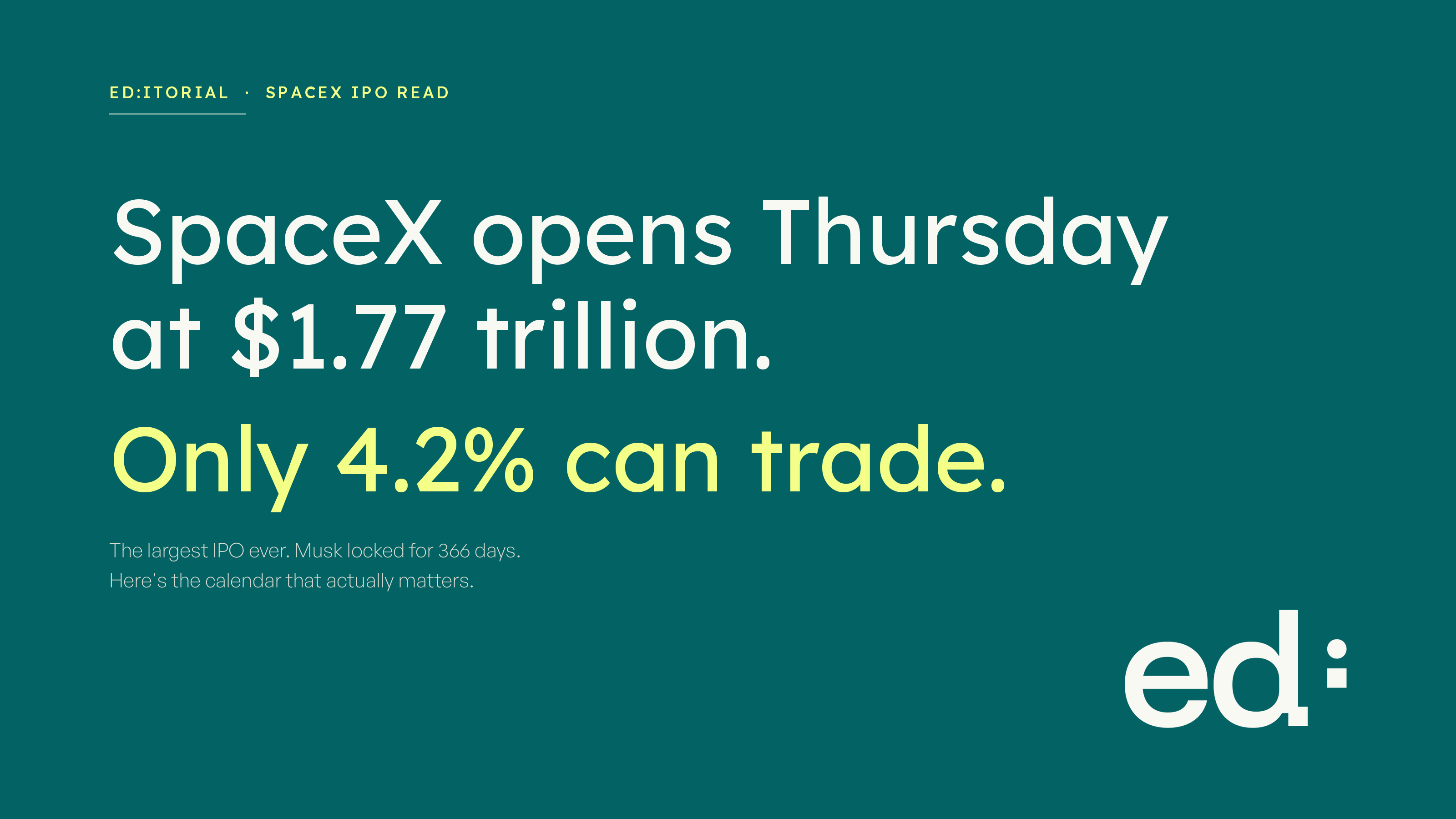
SpaceX opens Thursday at a $1.77 trillion valuation — the largest IPO ever. Only 4.2% of stock actually trades. Musk is locked up for 366 days. The next 366 days run on an unusually clean calendar of supply releases. Here are the 13 dates worth watching.

SpaceX goes public Thursday with a possible $5 trillion hit. Here's the calendar that actually matters.

SpaceX prices Wednesday night and opens Thursday on Nasdaq at $135 per share — a $1.77 trillion valuation, the largest IPO ever. Most coverage will frame what comes next as a sentiment trade, an Elon story, or a race to Goldman's $5 trillion bull case. The reality is more grounded and more useful: the next 366 days are governed by an unusually clean calendar of supply releases — when 95.8% of the company can or cannot trade, when index funds add weight, when the lock-up cliff arrives, when Musk himself becomes a potential seller for the first time. Read the calendar and you've already understood the structure most market commentary will spend the next quarter trying to explain. Here are the 13 dates worth watching. Two things keep showing up in headlines that don't survive a careful read. The first is the idea that index funds are about to be forced into a massive single-event SpaceX buy. They aren't. Nasdaq did create a fast-track inclusion rule that lets SpaceX join the Nasdaq 100 wi
Edgen
·
Jun 10 2026

Đầu tư, cuối cùng không phải một mình nữa.

Dùng thử Ed miễn phí. Không cần thẻ, không ràng buộc.