Content
¿Qué es Crypto Mindshare?
¿Por qué Mindshare a menudo supera a los fundamentos (a corto ...
¿Por qué la mayoría de los traders pierden las señales tempran...
Cómo el Aprendizaje Automático Convierte la Atención en Alpha
Cómo Edgen hace que el Mindshare sea accionable para los trade...
Radar Edgen: Seguimiento en Tiempo Real de la Atención
Predicción de la Atención y Dinámica de los Precios mediante I...
Búsqueda Edgen: Investigación instantánea sin ruido
Filtros de Detección de Estafas Integrados
Seguimiento temprano de carteras inteligentes de alto rendimie...
Insights de Edgen: Alfa probado de traders exitosos
Aura: Construyendo una Reputación de Comerciante a través del ...
Entendiendo el ciclo de Mindshare: De la charla a la explosión
Edgen utiliza el aprendizaje automático para ofrecer:
¿Quieres seguir la atención del mercado en este momento?

Markets Confusing? Ask Edgen Search.

Instant answers, zero BS, and trading decisions your future self will thank you for.

Try Search Now

El papel del aprendizaje automático en el mindshare de las criptomonedas

Edgen
· Mar 31 2026
El papel del aprendizaje automático en el mindshare de las criptomonedas

Cómo la IA ayuda a los traders a seguir la atención y predecir el alpha antes de que el mercado se mueva

¿Qué es Crypto Mindshare?

Mindshare significa literalmente la participación de atención de un proyecto entre los traders y comunidades de criptomonedas. En los mercados de criptomonedas, la atención impulsa el comportamiento del precio. Los tokens que dominan las conversaciones en Twitter, las discusiones en grupos de Telegram, las menciones de influencers o la actividad de billeteras suelen ganar impulso rápidamente. Si estas señales se vuelven evidentes, es probable que el movimiento real haya comenzado o ya haya ocurrido.

Indicadores típicos de un fuerte mindshare incluyen:

  • Menciones persistentes en Twitter
  • Conversaciones activas en grupos de Telegram
  • Influencers discutiendo con frecuencia el token
  • Actividad incrementada en billeteras inteligentes

Identificar la cuota de mente temprano permite a los operadores capturar movimientos de precio antes que el mercado en general.Here’s a breakdown of how social sentiment can directly move crypto markets,reforzando por qué la atención suele ser la primera señal real.

¿Por qué Mindshare a menudo supera a los fundamentos (a corto plazo)

En cripto, la atención del mercado mueve los precios más rápido que los fundamentos. Los tokens sin casos de uso claros o incluso productos tangibles pueden experimentar un crecimiento rápido puramente por hype. Mientras tanto, los tokens con fundamentos sólidos pueden permanecer estancados durante meses, e incluso años, si el mercado los ignora o no está suficientemente entusiasmado. El ejemplo extremo son los memecoins, que toman cuota de mercado sin tener utilidad previa.

Los tokens impulsados por Mindshare reciben liquidez primero. Los traders necesitan liquidez para obtener ganancias de los movimientos de precio a corto plazo. El proceso suele desarrollarse de la siguiente manera:

  • La euforia social aumenta la demanda inmediata.
  • La entusiasmo comunitario refuerza las narrativas.
  • Los cambios de liquidez se dirigen hacia tokens en tendencia.
  • Los traders minoristas siguen la euforia visible en lugar de los desarrollos subyacentes.

Reconocer la atención temprano proporciona una ventaja al capturar movimientos antes de que ocurran.

¿Por qué la mayoría de los traders pierden las señales tempranas de atención?

Mindshare no proviene de una sola fuente, sino que es generalmente perceptible para quien sigue de cerca los mercados y comunidades de criptomonedas. Se forma simultáneamente a través de diversos indicadores, incluyendo:

  • Transacciones de billetera inteligente
  • Tendencias de Twitter y menciones
  • Participación en la comunidad de Discord
  • Rotaciones de influencers a nuevas monedas
  • Mayor número de implementaciones de contratos inteligentes

La mayoría de los traders tienen dificultades para captar estas señales tempranas porque ellos:

  • No supervises de cerca la actividad de la billetera inteligente
  • Ignorar los cambios sutiles en la sentimiento del mercado
  • Reconocer las tendencias demasiado tarde, después de que los primeros en moverse hayan salido

El aprendizaje automático resuelve estos desafíos identificando e interpretando patrones complejos antes de que sean claros para los observadores humanos.

Cómo el Aprendizaje Automático Convierte la Atención en Alpha

El aprendizaje automático mejora las decisiones de trading al procesar rápidamente patrones complejos y multidimensionales. En el trading de criptomonedas, el ML destaca especialmente en:

  • Detectar entradas tempranas a billeteras inteligentes
  • Identificar un crecimiento rápido en menciones sociales
  • Distinguir narrativas auténticas de la propaganda superficial
  • Puntuar tendencias emergentes según el desempeño histórico
  • Predecir el momento entre la atención inicial y los movimientos posteriores de precio

Edgen AIutiliza el aprendizaje automático para ofrecer precisamente estas capacidades, convirtiendo la atención del mercado en alpha accionable.

Cómo Edgen hace que el Mindshare sea accionable para los traders

Edgen ayuda a los traders minoristas a replicar estrategias típicamente reservadas para jugadores con capital inteligente. Rastrea el interés en criptomonedas de forma continua en múltiplas plataformas, cadenas y billeteras, convirtiendo los datos en tiempo real en señales comerciales.

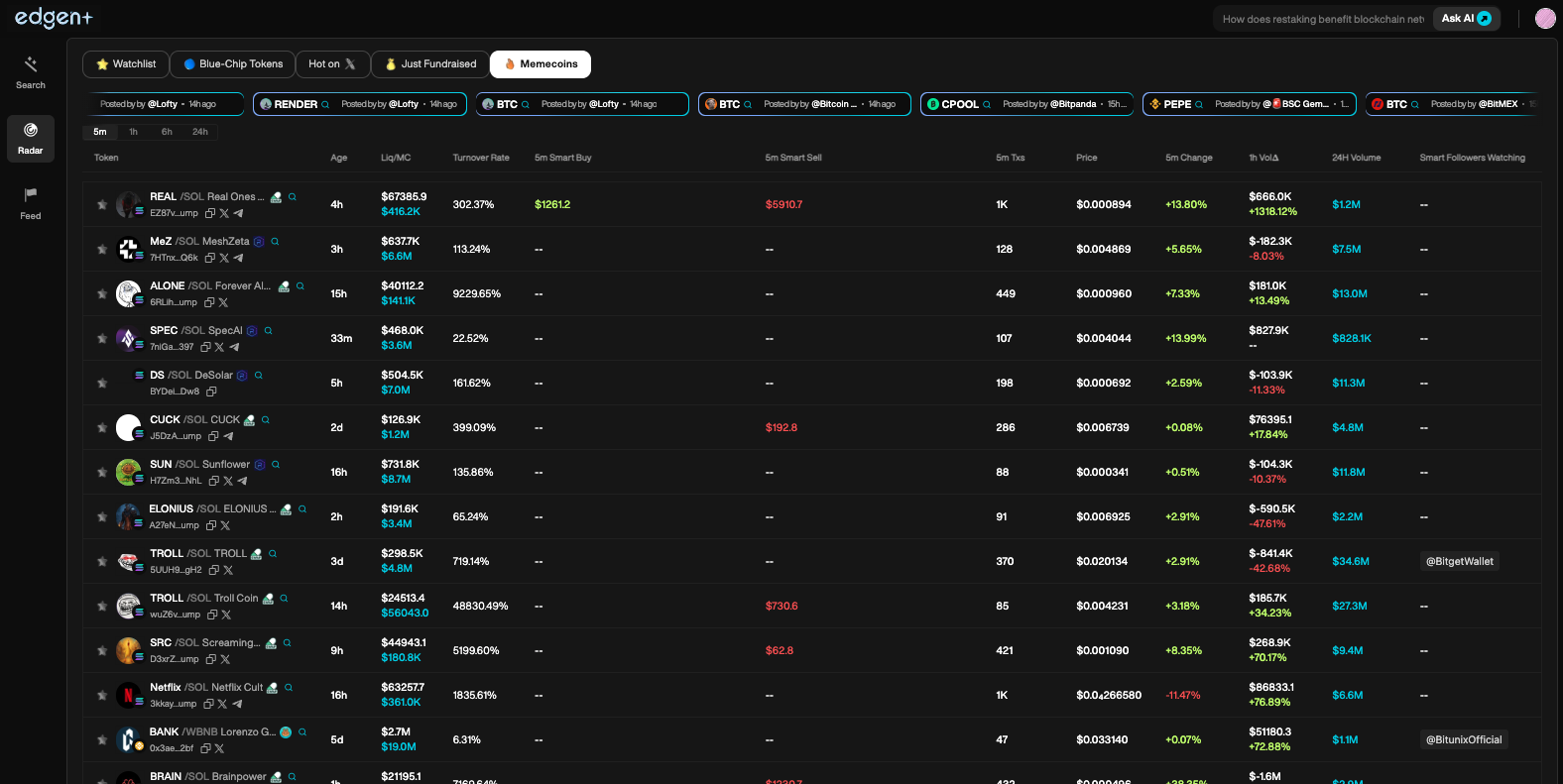
Radar Edgen: Seguimiento en Tiempo Real de la Atención
Crypto Mindshare

Edgen Radarmonitores:

  • Tokens que atraen flujos significativos de billeteras inteligentes
  • Proyectos que acaban de recaudar fondos con liquidez en aumento
  • La difusión y velocidad de las conversaciones sociales relacionadas con tokens

El radar opera de manera continua, proporcionando señales tempranas antes de que los precios respondan.

Predicción de la Atención y Dinámica de los Precios mediante IA

Los modelos de inteligencia artificial de Edgen analizan los patrones de atención evaluando:

  • Velocidad y aceleración de menciones sociales
  • Tasa de crecimiento en las discusiones de la comunidad en línea
  • Fuerza de la actividad de billetera inteligente detrás de cada narrativa
  • Patrones históricos y longevidad de tendencias similares

A cada token se le asigna una puntuación predictiva, que indica claramente si su tendencia continuará, invertirá o fallará. Este enfoque predictivo ayuda a los traders a evitar seguir narrativas caducas.

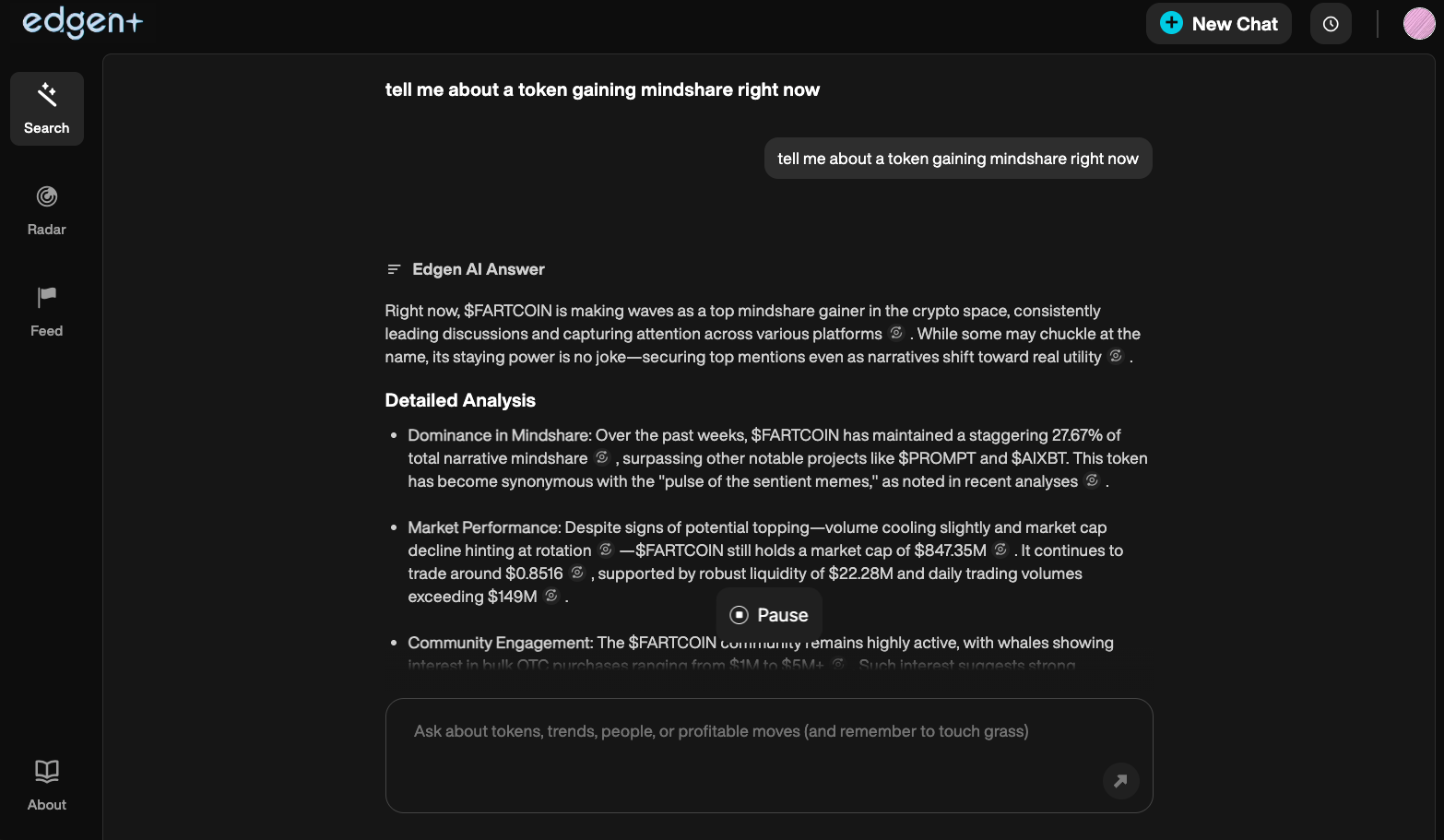
Búsqueda Edgen: Investigación instantánea sin ruido
Crypto Mindshare

Cuando los traders encuentran nuevos tokens,Edgen Searchproporciona contexto inmediato:

  • Resumen del token
  • Reciente crecimiento o disminución en menciones sociales
  • Ingresos y egresos en tiempo real de la billetera
  • Menciones por cuentas influyentes
  • Actividades de contratos inteligentes en cadena

Esto elimina las horas dedicadas a filtrar información fragmentada de múltiples fuentes.

Filtros de Detección de Estafas Integrados

Los movimientos basados en la atención suelen ser manipulados. Edgen identifica las señales de alerta antes de que los traders se conviertan en víctimas, alertando a los usuarios sobre:

  • Billeteras inteligentes vendidas durante períodos de máxima euforia social
  • Comportamientos repetidos de copia y pegado promocionales
  • Eliminación repentina de los depósitos de liquidez
  • Contratos inteligentes reutilizados de estafas conocidas

Este enfoque proactivo separa la atención auténtica de la hype manipulada.

Seguimiento temprano de carteras inteligentes de alto rendimiento

Edgen monitorea grupos de billeteras que son consistentemente rentables. Cuando estas billeteras comienzan discretamente a rotar hacia un nuevo token, Radar identifica esta actividad antes de que cambie la sentimiento social.

Esta ventaja de tiempo permite a los operadores ingresar a las tendencias mientras se forman, no después de que hayan alcanzado su cima.

Insights de Edgen: Alfa probado de traders exitosos

Insights Edgen presenta contenido accionable de traders con historiales verificados. Cada aportación está claramente:

  • Fecha y hora para precisión
  • Comparado con el desempeño real
  • Clasificado según las tasas de éxito históricas

Los traders obtienen un alpha confiable de contribuyentes con visión de mercado comprobada.

Aura: Construyendo una Reputación de Comerciante a través del Rendimiento Probado

Aura es el sistema de reputación de Edgen que recompensa a los traders por su precisión constante y detección temprana de tendencias. Los usuarios obtienen Aura mediante:

  • Compartir información valiosa del mercado
  • Identificar tendencias antes de su reconocimiento generalizado
  • Contribuyendo datos de alta calidad a los modelos predictivos de Edgen
  • Mantener una precisión consistente y verificable en sus llamadas

Aura actúa como una señal de confianza, demostrando la capacidad de un trader para identificar alpha accionable.

Entendiendo el ciclo de Mindshare: De la charla a la explosión

En cripto, la atención es el verdadero generador de alpha. Dicta el volumen de trading, impulsa la volatilidad del precio y crea oportunidades rentables cuando se detecta temprano.

Edgen utiliza el aprendizaje automático para ofrecer:

  • Monitoreo continuo en tiempo real de la cuota de mente emergente
  • Análisis predictivo que anticipa movimientos de precios basados en cambios de atención
  • Una herramienta integral para comerciar de manera efectiva antes de la adopción generalizada

Los comerciantes ya no necesitan perseguir tendencias establecidas. Simplemente identifican tokens que están obteniendo atención antes de que el mercado responda.

¿Quieres seguir la atención del mercado en este momento?

Comience conEdgen Radartu dashboard en tiempo real dedicado que rastrea tokens en tendencia, flujos de billeteras inteligentes y señales de mercado accionables.

Identifique la atención antes de los picos de precio. Comprenda el mindshare de manera inteligente y deje atrás el ruido del mercado.


Recommend
Redeem miles for gift cards and each is worth ~1 cent; redeem for long-haul business and they're worth 2.5-4+. With programs now dynamically priced, the one check that decides every redemption.

How to redeem airline miles without wasting them

The single biggest mistake with miles is redeeming them for the easy stuff: gift cards, merchandise, seat upgrades at the gate. Do that and each mile is worth about one cent. Redeem the *same* miles for flights, especially long-haul or premium-cabin flights, and they're often worth two to five cents each, sometimes more. So the real skill isn't earning miles; it's not throwing away their value at the finish line. Here's how to actually use them. A mile has no fixed price; its value depends entirely on what you redeem it for. The way to judge any redemption is simple math: (cash price of the flight) ÷ (miles it costs) = cents per mile. If a flight costs $400 or 20,000 miles, that's 2 cents a mile, a solid deal. If a $90 flight costs 18,000 miles, that's half a cent, which is terrible; pay cash and keep the miles. Run this check before every redemption. It instantly separates a great use from a waste, and it's the one habit that makes miles worth having. As a rule of thumb, most major ai
Edgen
·
Jun 30 2026
Short-term goals (under ~3 years) belong in safe cash; long-term goals (5+ years) can take market risk. The best HYSAs now pay ~4-5% APY. How to sort yours and run both.

Long-term vs short-term financial goals (and how to plan both)

The difference comes down to one thing: time. A short-term goal is money you'll need within roughly three years (an emergency fund, a trip, a wedding, next year's tax bill), so it has to be *safe and reachable*. A long-term goal is five-plus years out (retirement, a house down the road, a kid's education), so it can take market risk, because time smooths the bumps out. Get that match right and you've done most of the work. It's not the size, it's the deadline. A $2,000 goal you need in six months is short-term; a $2,000 goal you won't touch for fifteen years is long-term, and they belong in completely different places. This is the part that actually matters, and where people lose money without realizing it. Short-term money should not be in the stock market. If your emergency fund is in stocks and the market drops 20% the same month your car dies, you're selling at the worst possible time. Short-term goals go somewhere stable and accessible, and a high-yield savings account is the clas
Edgen
·
Jun 30 2026
Mortgages near 6.5%, home prices flat, and the Fed split on rate cuts vs hikes. With timing a coin flip, the 3 questions that actually decide whether to buy now or wait.

Should you buy a house now or wait? How to actually decide

The honest answer: buy when you'll stay put for at least five years and you'll still have an emergency fund left after the down payment. Otherwise, waiting (and renting) is often the smarter money move, not the weaker one. "Rent vs buy" isn't a math problem with one right answer, and it's almost never really about timing the market. It's about your *life*, in three questions. Before the three questions, here's the mid-2026 backdrop — because "now or wait" usually hides a bet on rates and prices, and the data says that bet is a coin flip. The picture: mortgages are still pricey, prices have gone flat (more than half of the 20 big metros saw year-over-year declines in March), and the cheap-money era hasn't returned. So "buy before it runs away" and "wait for the crash" are *both* weak arguments right now. The whole "wait for rates to drop" plan rests on the Fed, and the Fed is split down the middle. In its June 2026 projections, policymakers were divided: 8 expected no change this year,
Edgen
·
Jun 30 2026
Most financial goals fail because they're wishes, not systems. Here's the 3-part anatomy of a goal that sticks (a number, a date, one automatic move), plus why 37% of adults can't cover a $400 surprise.

How to set financial goals you'll actually hit

A financial goal you'll actually hit has three things a vague wish doesn't: a number, a date, and one automatic move that happens whether or not you remember it. "Save more" is a wish. "$6,000 in a separate account by next December, $500 auto-transferred on payday" is a goal. The gap between those two sentences is the reason most goals quietly die, and it has almost nothing to do with willpower. Key Takeaways A real financial goal answers three questions: how much, by when, and what for. Drop any one and it stops working. "Pay off debt" has no number and no date, so there's nothing to aim at or measure, while "$8,000 of card debt cleared in 18 months" tells you exactly whether you're on track and the day you're done. The "what for" matters more than people expect. A goal tied to something real (a buffer so a bad month isn't a crisis, a deposit on a first place) survives the months when motivation dips. In our experience reading how people actually use a money tool, the goals that get
Edgen
·
Jun 30 2026
A big RSU grant just vested — now what? Here's what a modern money tool actually surfaces first, using Ed as a worked example: a reality check, the 22% tax gap most high earners miss, and the concentration risk nobody flags.

Your RSUs Just Vested. Here's What a Money Tool Surfaces First.

You just had a big RSU grant vest. Congratulations — and now the awkward part: a six-figure pile of your own company's stock, a vague sense you should "do something," and no one actually telling you what. An advisor, a spreadsheet, and a piece of software each handle this moment differently. Here's what a modern money tool surfaces in a moment like this — using Ed as a worked example — so you can decide what kind of help actually fits. Key takeaways You connect your brokerage and bank through read-only aggregation, so the tool can read balances but can't move a dollar. Ed's framing is simple: precise about your money, blind to your identity. Instead of sorting your lattes into categories, Ed opens on a single Financial Reality Check — a read on whether your money could survive a bad month. For a lot of high earners, that one number lands harder than any budget, because it answers a question the other apps never ask. (If the Reality Check is the numbers side, your money type is the beha
Edgen
·
Jun 26 2026
A money personality test is more than a quiz if it measures behavior, not just vibes. Here's the science behind money types, how Ed's test works, and how to use your result.

What Is a Money Personality Test? The Science Behind Your Money Type

The short version: a good money personality test should feel like a roast and work like a mirror — fun on the surface, behavioral underneath. The useful ones don't tell you what you know; they show you how you act with money, and the one blind spot worth watching. Key takeaways Here's the uncomfortable backdrop. U.S. financial literacy has been stuck for a decade — adults answer only about 49% of the standard knowledge questions correctly, essentially flat since 2017 (TIAA Institute–GFLEC, 2025) — even as free financial information became infinite. If facts fixed money, they'd have fixed it by now. They don't, because the thing that actually drives your outcomes lives one level below the facts: how you're wired to behave when money is on the line. That's the whole premise of financial fitness — and it's what a money personality test is built to surface. Not what you know. What you do. The idea has real research behind it — money behavior is patterned and measurable, and a few tradition
Edgen
·
Jun 23 2026
A financial reality check scores where you actually stand across safety, control, progress, upside, and Mental Load. Here's why a money score matters, how Ed's checkup works, and what to do with your weakest area.

What Is a Financial Reality Check? Why Your Credit Score Isn't Enough

The short version: your credit score measures how safe you are to lend to. Almost nobody has ever seen the number that measures whether you are actually secure. A financial reality check is that second number. Key takeaways Ask people for their credit score and many can recite it. Ask whether they could survive three months without income, or where their money quietly leaks each month, and you get a shrug. That's the gap. A credit score answers a lender's question — how risky is it to extend this person debt? It can be high while your life is fragile, or low while you're genuinely fine, because it was never built to measure you. A financial reality check answers the question the credit score ignores: are you safe, clear, progressing, building, and at ease? Here's the simple version, with the research behind each axis.
Edgen
·
Jun 23 2026
SpaceX opens Thursday at a $1.77 trillion valuation — the largest IPO ever. Only 4.2% of stock actually trades. Musk is locked up for 366 days. The next 366 days run on an unusually clean calendar of supply releases. Here are the 13 dates worth watching.

SpaceX goes public Thursday with a possible $5 trillion hit. Here's the calendar that actually matters.

SpaceX prices Wednesday night and opens Thursday on Nasdaq at $135 per share — a $1.77 trillion valuation, the largest IPO ever. Most coverage will frame what comes next as a sentiment trade, an Elon story, or a race to Goldman's $5 trillion bull case. The reality is more grounded and more useful: the next 366 days are governed by an unusually clean calendar of supply releases — when 95.8% of the company can or cannot trade, when index funds add weight, when the lock-up cliff arrives, when Musk himself becomes a potential seller for the first time. Read the calendar and you've already understood the structure most market commentary will spend the next quarter trying to explain. Here are the 13 dates worth watching. Two things keep showing up in headlines that don't survive a careful read. The first is the idea that index funds are about to be forced into a massive single-event SpaceX buy. They aren't. Nasdaq did create a fast-track inclusion rule that lets SpaceX join the Nasdaq 100 wi
Edgen
·
Jun 10 2026

Invertir, por fin, ya no es cosa de uno solo.

Prueba Ed gratis. Sin tarjeta, sin compromiso.