コンテンツ
暗号通貨は速く動く。AIはさらに速く動く。
1. AIを活用したより速く効率的な取引
エッジンAIが取引効率をどのように向上させるか:
現実的な例:
AI取引 vs. 人間の取引:
2. よりスマートで信頼性の高いトレードサイン
エッジン・サーチの利点:
実際のシナリオ:
3. 感情を排除した、規律あるトレード
エッジン・インサイトズの主な利点:
実際の例:
4. 上位のリスク管理と資産保護
エッジンAIのリスク管理機能:
実際のシナリオ:
5. インテリジェントAI戦略を通じた利益の最大化
エッジンAIがアルファ機会をどのように開くか:
実際の例:
AIが暗号通貨取引の未来を定義する
AI取引の利点の要約:

市場が複雑すぎますか?Edgen Searchに聞いてみてください。

答えはすぐに表示され、情報は正確で、あなたが未来を決めるトレーディング判断を下せるようにします。

今すぐ Search を体験

仮想通貨取引に AI を使用するメリット トップ 5

Edgen
· Mar 31 2026
仮想通貨取引に AI を使用するメリット トップ 5

暗号通貨は速く動く。AIはさらに速く動く。

暗号通貨市場は24時間稼働しています。価格はツイート、ニュースの急報、または大規模な取引に基づいて瞬時に変動します。常に変動する市場に追いつくことは、人間のトレーダーにとって課題です。

暗号通貨取引用のAIはこのギャップを埋めます。AIは市場データを迅速に処理し、正確な予測を行い、素早く取引を実行します。感情を取り除き、意思決定を改善することで、AIはトレーダーが利益を最大化し、リスクを最小限に抑えることを助けます。

Edgen AI人工知能をブロックチェーン分析とソーシャルマーケットインサイトと統合することで、この進化をリードし、包括的なトレーディングの優位性を構築しています。

暗号通貨取引においてAIが不可欠になっているトップ5の理由を調べてみましょう。

1. AIを活用したより速く効率的な取引

暗号通貨において、取引のスピードが収益性を決定します。遅延は機会を失うことになります。AI取引ボットは膨大なデータセットを迅速に分析し、利益を生むトレードのパターンを即座に特定し、人間が反応する前に取引を実行します。

エッジンAIが取引効率をどのように向上させるか:

  • Edgen Radar:ブロックチェーン上のデータ、ソーシャルセンチメント、ホワイトの動きを即時モニタリングする機能を提供します。
  • 即時実行:AI駆動のボットがミリ秒単位で取引を実行し、手動の遅延を排除します。
  • 社会的合意統合:「ポンプメントルズ(pumpamentals)」を追跡し、トレーダーがソーシャル駆動型の市場機会を早期に確認できるようにします。
  • 減少したエラー:オートメーションされた実行により、高コストな人為的ミスが最小限に抑えられます。

現実的な例:

エッジン・ラダールを使用するトレーダーは、スマートウォレットがトークンを積み増していることにすぐに気づきます。AIは同時にX(ツイッター)などのプラットフォーム上のキーオピニオンリーダー(KOL)をモニタリングし、特定のプロジェクトをフォローしている人物を把握することで、上昇するソーシャルセンチメントを強調します。トレーダーはその瞬間に利益を上げ、価格が上昇する前に取引を開始します。

AI取引 vs. 人間の取引:

機能

人間取引者

AIを駆動するトレーディング

スピード

遅い、手動による分析

ミリ秒の実行

感情

恐怖と貪欲は意思決定に影響を与える

完全にデータ駆動型の

データ処理

限られた処理能力

数百万のデータポイントを即座に処理する

利用可能性

疲労/休憩によって制限されている

連続して動作する

AIは明らかに手動取引の方法を上回っている。

2. よりスマートで信頼性の高いトレードサイン

市場のシグナルは品質に違いがある。AIは真のアルファシグナルと市場ノイズを区別する。

エッジン・サーチの利点:

  • データに基づいたAI研究で、市場の質問に即座に答えます。
  • 関係ない情報をフィルタリングし、信頼できるインサイトにのみ焦点を当てます。
  • ソーシャルメディアおよびブロックチェーン活動における新規トークンのトレンドを素早く特定します。

実際のシナリオ:

トレーダーはアルトコインのブレイクアウトに気づく。エッジン・ラジオを使用して、トレーダーは数秒でスマートウォレットの取引、流動性の変化、インフルエンサーの言及を確認する。推測による当てずらな判断ではなく、AIが実行可能な知見を提供し、情報に基づいた決定を保証する。

3. 感情を排除した、規律あるトレード

感情は高コストな誤りを引き起こす。AIは体系的でデータ駆動型の洞察を提供する。Edgen Insights さらに、コミュニティから得られた検証済みのインテリジェンスでトレーダーをサポートします。

エッジン・インサイトズの主な利点:

  • トレーダー間でアルファシグナルを共有するリアルタイムプラットフォーム。
  • AIによるモデレーションは、正確で高品質な情報の確保を保証します。
  • オーラインセンティブシステムは、価値ある市場の洞察を提供するユーザーに報酬を与えます。
  • 明確に現実的な市場状況を示し、感情的な衝動を避ける。

実際の例:

トレーダーは、トレンドのコインにFOMO(後悔)して取引したくなることがある。エッジン・インサイトを確認したところ、トレーダーはコミュニティの意見が過剰であることがすぐに分かったが、その裏付けとなる強力なオフチェーンのサポートは見られなかった。AIは高リスク状況を示しており、トレーダーが高コストな感情的な取引を避ける助けになっている。

4. 上位のリスク管理と資産保護

暗号通貨のボラティリティは、高度なリスク対策を必要とします。AIは早期に出現する脅威を特定し、それに応じてポジションを調整します。

エッジンAIのリスク管理機能:

  • 市場状況を継続的にモニタリングし、迅速にポジションを調整する。
  • リアルタイムで座礁したクジラの取引と流動性の変動を追跡します。
  • 市場の変動に関する即時のアラートを発し、急な損失を防止します。
  • 単一資産のリスクを軽減するために保有品を自動的に多様化します。

実際のシナリオ:

トレーダーは、トークンにおける大規模なホエール(大口投資家)の売却について、エッジン・ラジオの即時アラートを受けます。AIはすぐにポジションを減らすよう推奨し、市場全体がその動きに気づく前に、トレーダーを大きな下落から守ります。

AIは、暗号通貨取引を機関のリスク基準に合わせます。例えば、the NIST Risk Management FrameworkAIで駆動されるシステム、例えばEdgenのように、暗号通貨において現在、継続的なモニタリングと迅速な対応が可能になっていることを強調している。

5. インテリジェントAI戦略を通じた利益の最大化

AIは、高潜在力の取引を特定し、実行戦略を最適化することによって、リスクを同時に低減し収益を向上させます。

エッジンAIがアルファ機会をどのように開くか:

  • Edgen Search見過ごされている取引機会を特定する。
  • AIで駆動されるボットがブロックチェーン上のアービトラージを実行し、価格の不一致から利益を得ます。
  • エッジン・ラダーラは、初期段階の社会的動員を強調し、適切なタイミングでの取引を可能にします。
  • AIを駆動するポートフォリオのバランス調整は、最大限の収益を得るための最適な資産配分を保証します。

実際の例:

トレーダーは、急上昇しているアルトコインを発見する。エッジン・ラダーよりも大きなウォールストリートの蓄積が確認され、エッジン・サーチにより詳細なブロックチェーンの洞察が提供され、エッジン・インサイトによって強力なコミュニティの熱狂が確認される。AIが公的な認識よりも先に取引を開始し、利益を大幅に向上させる。

AIが暗号通貨取引の未来を定義する

暗号通貨市場は常に稼働し続けます。AIも同様です。エッジンAIのエコシステムであるRadar、Search、Insightsは、24時間常に使い勝手よく、高速で収益性の高いトレーディングを提供します。

AI取引の利点の要約:

  • 迅速な取引実行で、人間の能力を上回る。
  • 正確でタイムリーなシグナル、強力なAI分析によって裏付けられている。
  • 感情に左右されない取引で、衝動的な意思決定を排除する。
  • 投資を保護するための積極的なリスク管理。
  • 戦略的実行により利益をもたらす機会を最大化する。

AIを活用した利点を活かして、暗号通貨市場を一貫して上回る。

トレードをレベルアップしたいですか?スマートに取引を始めましょう。Edgen AI今日。

紹介
Redeem miles for gift cards and each is worth ~1 cent; redeem for long-haul business and they're worth 2.5-4+. With programs now dynamically priced, the one check that decides every redemption.

How to redeem airline miles without wasting them

The single biggest mistake with miles is redeeming them for the easy stuff: gift cards, merchandise, seat upgrades at the gate. Do that and each mile is worth about one cent. Redeem the *same* miles for flights, especially long-haul or premium-cabin flights, and they're often worth two to five cents each, sometimes more. So the real skill isn't earning miles; it's not throwing away their value at the finish line. Here's how to actually use them. A mile has no fixed price; its value depends entirely on what you redeem it for. The way to judge any redemption is simple math: (cash price of the flight) ÷ (miles it costs) = cents per mile. If a flight costs $400 or 20,000 miles, that's 2 cents a mile, a solid deal. If a $90 flight costs 18,000 miles, that's half a cent, which is terrible; pay cash and keep the miles. Run this check before every redemption. It instantly separates a great use from a waste, and it's the one habit that makes miles worth having. As a rule of thumb, most major ai
Edgen
·
Jun 30 2026
Short-term goals (under ~3 years) belong in safe cash; long-term goals (5+ years) can take market risk. The best HYSAs now pay ~4-5% APY. How to sort yours and run both.

Long-term vs short-term financial goals (and how to plan both)

The difference comes down to one thing: time. A short-term goal is money you'll need within roughly three years (an emergency fund, a trip, a wedding, next year's tax bill), so it has to be *safe and reachable*. A long-term goal is five-plus years out (retirement, a house down the road, a kid's education), so it can take market risk, because time smooths the bumps out. Get that match right and you've done most of the work. It's not the size, it's the deadline. A $2,000 goal you need in six months is short-term; a $2,000 goal you won't touch for fifteen years is long-term, and they belong in completely different places. This is the part that actually matters, and where people lose money without realizing it. Short-term money should not be in the stock market. If your emergency fund is in stocks and the market drops 20% the same month your car dies, you're selling at the worst possible time. Short-term goals go somewhere stable and accessible, and a high-yield savings account is the clas
Edgen
·
Jun 30 2026
Mortgages near 6.5%, home prices flat, and the Fed split on rate cuts vs hikes. With timing a coin flip, the 3 questions that actually decide whether to buy now or wait.

Should you buy a house now or wait? How to actually decide

The honest answer: buy when you'll stay put for at least five years and you'll still have an emergency fund left after the down payment. Otherwise, waiting (and renting) is often the smarter money move, not the weaker one. "Rent vs buy" isn't a math problem with one right answer, and it's almost never really about timing the market. It's about your *life*, in three questions. Before the three questions, here's the mid-2026 backdrop — because "now or wait" usually hides a bet on rates and prices, and the data says that bet is a coin flip. The picture: mortgages are still pricey, prices have gone flat (more than half of the 20 big metros saw year-over-year declines in March), and the cheap-money era hasn't returned. So "buy before it runs away" and "wait for the crash" are *both* weak arguments right now. The whole "wait for rates to drop" plan rests on the Fed, and the Fed is split down the middle. In its June 2026 projections, policymakers were divided: 8 expected no change this year,
Edgen
·
Jun 30 2026
Most financial goals fail because they're wishes, not systems. Here's the 3-part anatomy of a goal that sticks (a number, a date, one automatic move), plus why 37% of adults can't cover a $400 surprise.

How to set financial goals you'll actually hit

A financial goal you'll actually hit has three things a vague wish doesn't: a number, a date, and one automatic move that happens whether or not you remember it. "Save more" is a wish. "$6,000 in a separate account by next December, $500 auto-transferred on payday" is a goal. The gap between those two sentences is the reason most goals quietly die, and it has almost nothing to do with willpower. Key Takeaways A real financial goal answers three questions: how much, by when, and what for. Drop any one and it stops working. "Pay off debt" has no number and no date, so there's nothing to aim at or measure, while "$8,000 of card debt cleared in 18 months" tells you exactly whether you're on track and the day you're done. The "what for" matters more than people expect. A goal tied to something real (a buffer so a bad month isn't a crisis, a deposit on a first place) survives the months when motivation dips. In our experience reading how people actually use a money tool, the goals that get
Edgen
·
Jun 30 2026
A big RSU grant just vested — now what? Here's what a modern money tool actually surfaces first, using Ed as a worked example: a reality check, the 22% tax gap most high earners miss, and the concentration risk nobody flags.

Your RSUs Just Vested. Here's What a Money Tool Surfaces First.

You just had a big RSU grant vest. Congratulations — and now the awkward part: a six-figure pile of your own company's stock, a vague sense you should "do something," and no one actually telling you what. An advisor, a spreadsheet, and a piece of software each handle this moment differently. Here's what a modern money tool surfaces in a moment like this — using Ed as a worked example — so you can decide what kind of help actually fits. Key takeaways You connect your brokerage and bank through read-only aggregation, so the tool can read balances but can't move a dollar. Ed's framing is simple: precise about your money, blind to your identity. Instead of sorting your lattes into categories, Ed opens on a single Financial Reality Check — a read on whether your money could survive a bad month. For a lot of high earners, that one number lands harder than any budget, because it answers a question the other apps never ask. (If the Reality Check is the numbers side, your money type is the beha
Edgen
·
Jun 26 2026
A money personality test is more than a quiz if it measures behavior, not just vibes. Here's the science behind money types, how Ed's test works, and how to use your result.

What Is a Money Personality Test? The Science Behind Your Money Type

The short version: a good money personality test should feel like a roast and work like a mirror — fun on the surface, behavioral underneath. The useful ones don't tell you what you know; they show you how you act with money, and the one blind spot worth watching. Key takeaways Here's the uncomfortable backdrop. U.S. financial literacy has been stuck for a decade — adults answer only about 49% of the standard knowledge questions correctly, essentially flat since 2017 (TIAA Institute–GFLEC, 2025) — even as free financial information became infinite. If facts fixed money, they'd have fixed it by now. They don't, because the thing that actually drives your outcomes lives one level below the facts: how you're wired to behave when money is on the line. That's the whole premise of financial fitness — and it's what a money personality test is built to surface. Not what you know. What you do. The idea has real research behind it — money behavior is patterned and measurable, and a few tradition
Edgen
·
Jun 23 2026
A financial reality check scores where you actually stand across safety, control, progress, upside, and Mental Load. Here's why a money score matters, how Ed's checkup works, and what to do with your weakest area.

What Is a Financial Reality Check? Why Your Credit Score Isn't Enough

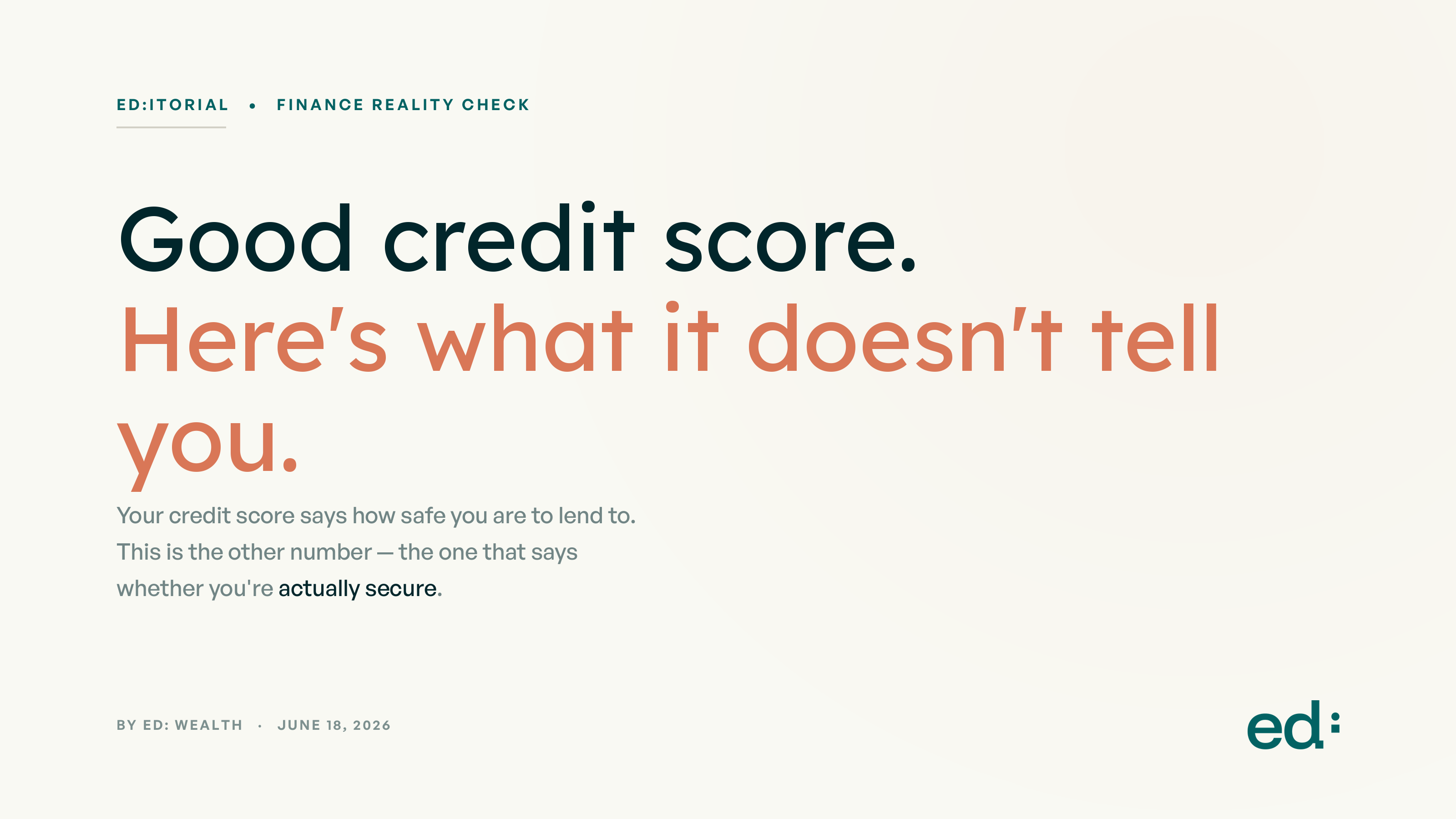
The short version: your credit score measures how safe you are to lend to. Almost nobody has ever seen the number that measures whether you are actually secure. A financial reality check is that second number. Key takeaways Ask people for their credit score and many can recite it. Ask whether they could survive three months without income, or where their money quietly leaks each month, and you get a shrug. That's the gap. A credit score answers a lender's question — how risky is it to extend this person debt? It can be high while your life is fragile, or low while you're genuinely fine, because it was never built to measure you. A financial reality check answers the question the credit score ignores: are you safe, clear, progressing, building, and at ease? Here's the simple version, with the research behind each axis.
Edgen
·
Jun 23 2026
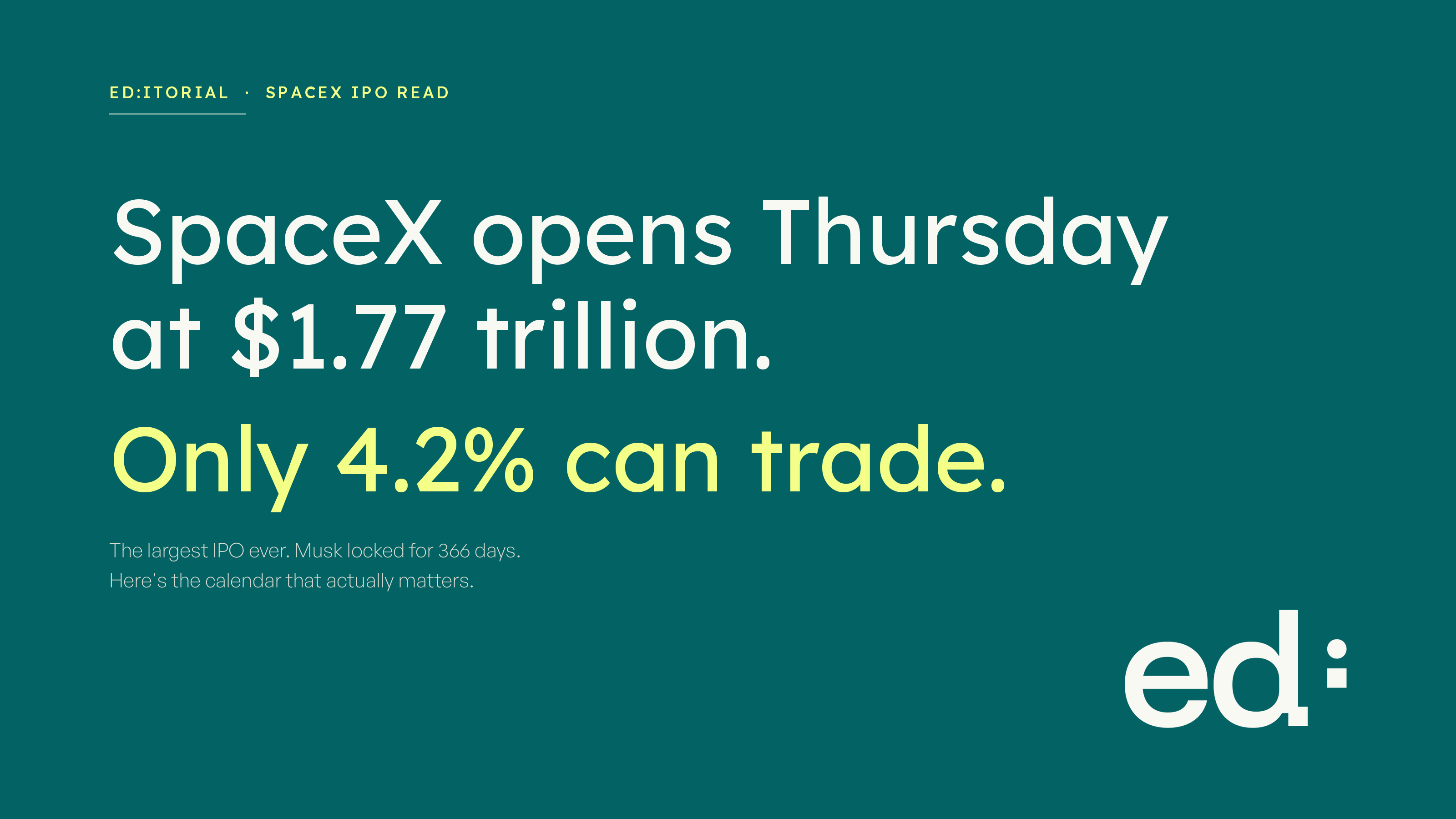
SpaceX opens Thursday at a $1.77 trillion valuation — the largest IPO ever. Only 4.2% of stock actually trades. Musk is locked up for 366 days. The next 366 days run on an unusually clean calendar of supply releases. Here are the 13 dates worth watching.

SpaceX goes public Thursday with a possible $5 trillion hit. Here's the calendar that actually matters.

SpaceX prices Wednesday night and opens Thursday on Nasdaq at $135 per share — a $1.77 trillion valuation, the largest IPO ever. Most coverage will frame what comes next as a sentiment trade, an Elon story, or a race to Goldman's $5 trillion bull case. The reality is more grounded and more useful: the next 366 days are governed by an unusually clean calendar of supply releases — when 95.8% of the company can or cannot trade, when index funds add weight, when the lock-up cliff arrives, when Musk himself becomes a potential seller for the first time. Read the calendar and you've already understood the structure most market commentary will spend the next quarter trying to explain. Here are the 13 dates worth watching. Two things keep showing up in headlines that don't survive a careful read. The first is the idea that index funds are about to be forced into a massive single-event SpaceX buy. They aren't. Nasdaq did create a fast-track inclusion rule that lets SpaceX join the Nasdaq 100 wi
Edgen
·
Jun 10 2026

投資、もうひとりじゃない

Ed を無料で試そう。クレカ不要、縛りなし