Content
ÖZET
Somnia Nedir
I. Temel ve Stratejik Analiz
1) Vizyon ve Yatırımcı Uyumu
2) Ekip ve Uygulama Yeteneği
3) Sermaye ve Onaylar
4) Pazar Fırsatı ve Uygunluk
5) Rekabetçi Konum ve Farklılaştırıcılar
II. Lansman Öncesi Ekosistem ve Pazara Giriş
1) Topluluk ve Anlatı Momentum
2) Zincir Üstü Ayak İzi
3) Ortaklıklar ve Hazırlık
4) Tokenomik ve Değer Birikimi (Bugün)
III. İleriye Dönük Analiz (Katalizörler ve Fırsatlar)
IV. Değerleme Senaryo Analizi (TGE FDV)
Rakip Ortamı (TGE anında/yakınındaki token açısından)
Sonuç

Markets Confusing? Ask Edgen Search.

Instant answers, zero BS, and trading decisions your future self will thank you for.

Try Search Now

Somnia L1: Zincir Üstü Dünyalar için Rüya Bilgisayar

· Mar 31 2026
Somnia L1: Zincir Üstü Dünyalar için Rüya Bilgisayar

Somnia'nın metaverse ve oyunlar için özel L1'ine bir bakış, strateji, ortaklar, token modeli, katalizörler ve değerlemeyi kapsar. Yeni kullanıcılar için basit bir rehber için buraya tıklayın.

ÖZET

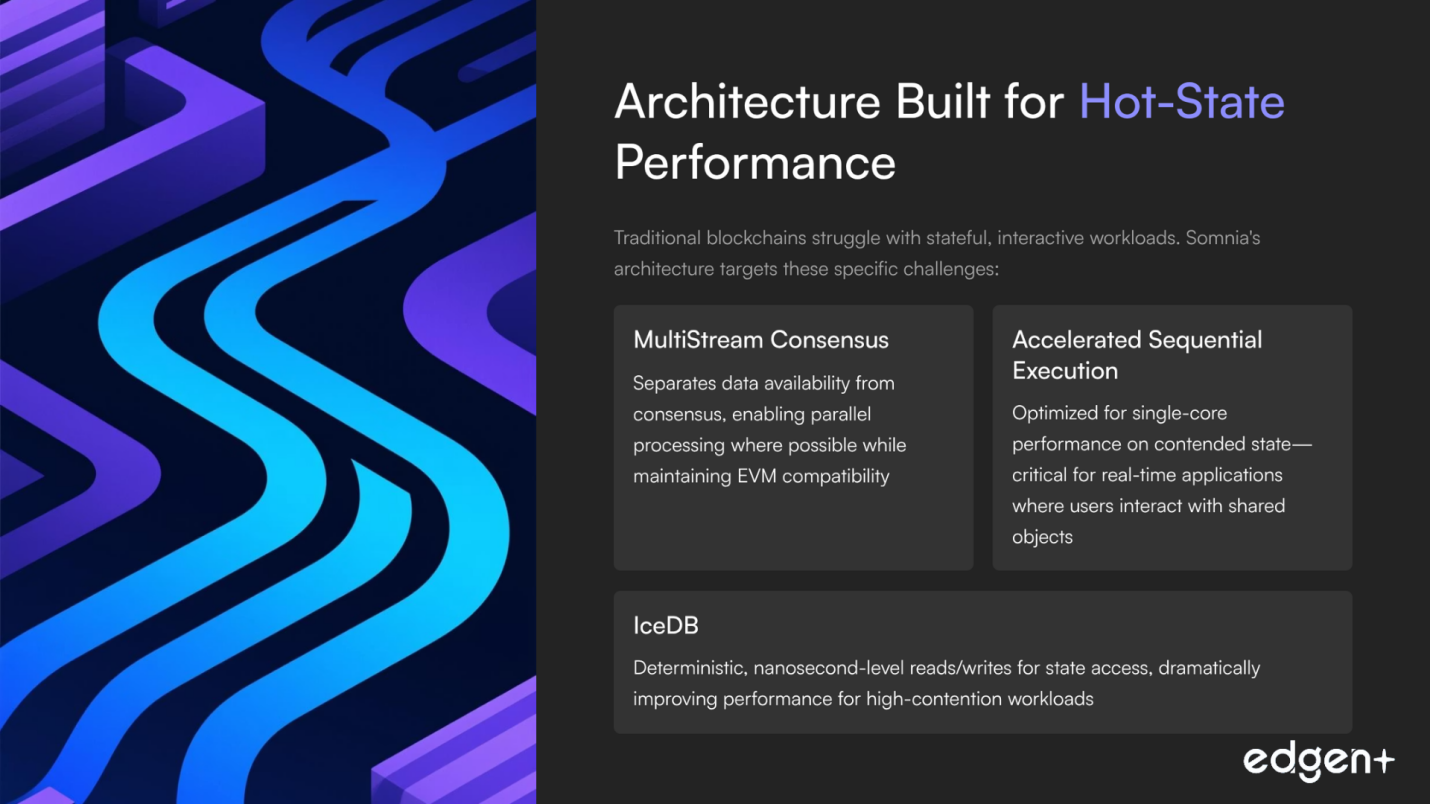
  • Gerçek zamanlı uygulamalar için özel L1: Mimari (MultiStream Consensus, Accelerated Sequential Execution, IceDB), diğer zincirlerin zorlandığı "hot-state" iş yüklerini hedefler.
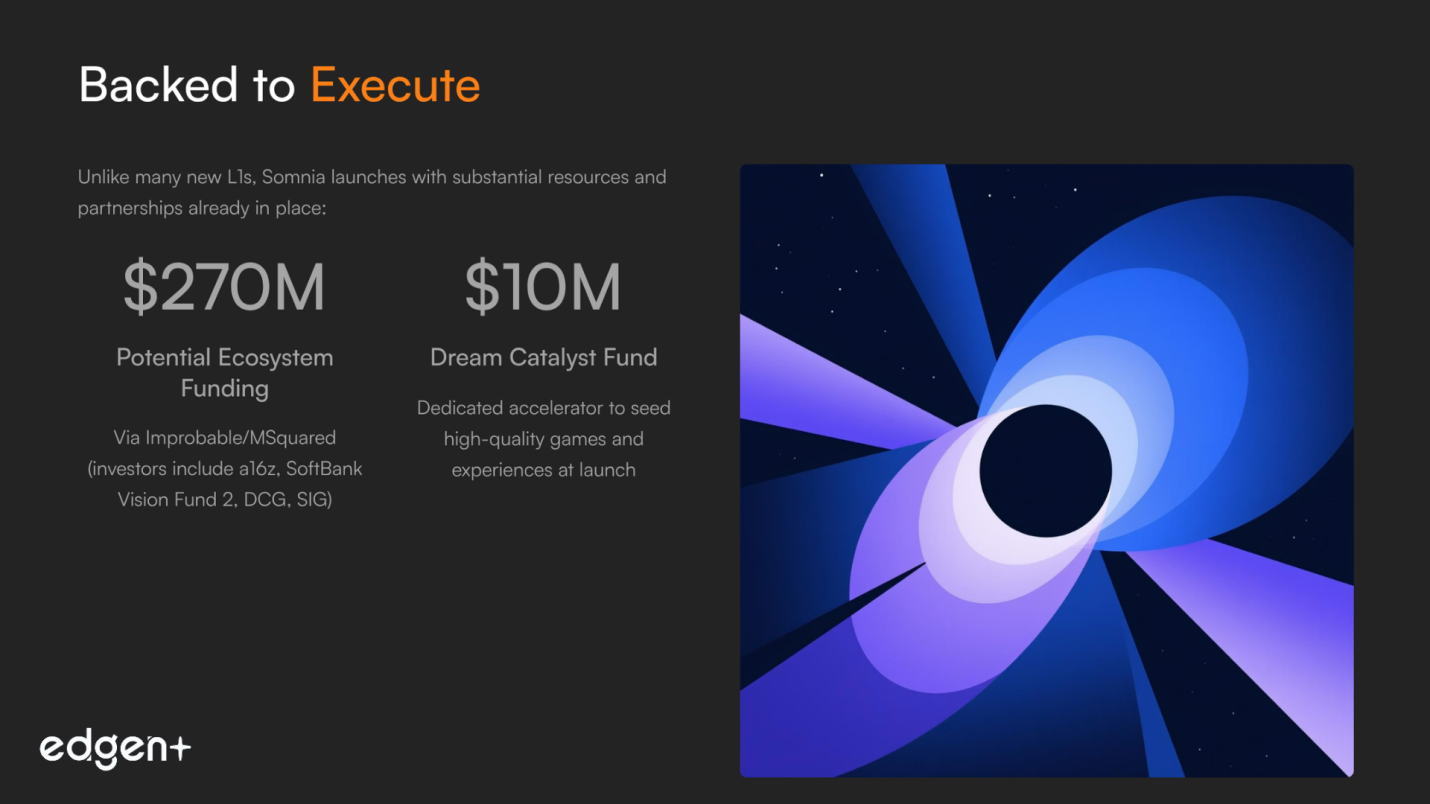
  • Uygulama için destekleniyor: Improbable/MSquared aracılığıyla 270 milyon dolara kadar ekosistem fonu, Google Cloud doğrulayıcı/altyapısı ve oyunları başlatmak için 10 milyon dolarlık Dream Catalyst ile Somnia, anlatıyı gerçek ürünlere dönüştürmek için konumlandırılmıştır.

Somnia Nedir

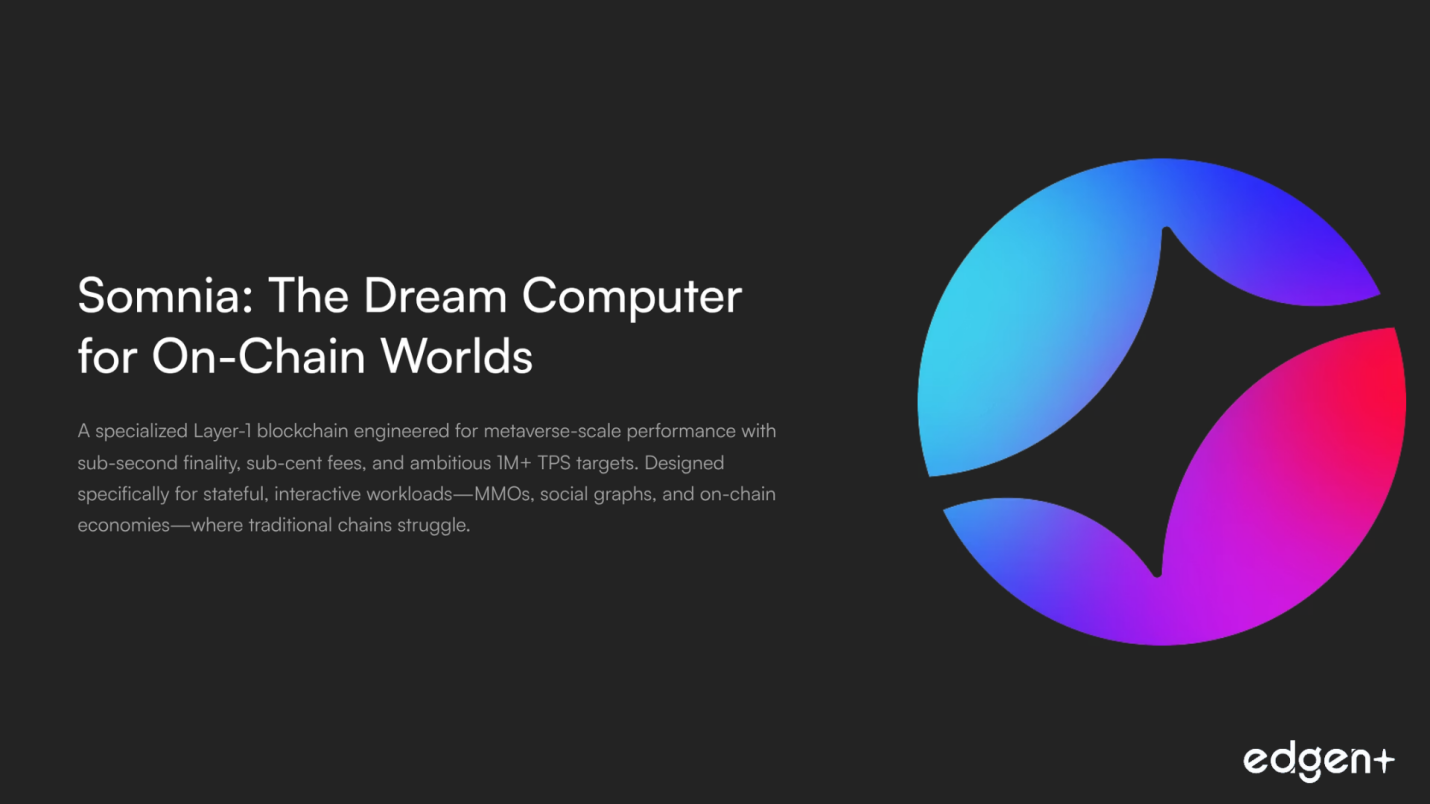
Somnia, metaverse ölçeğinde performans için tasarlanmış EVM uyumlu bir Katman-1'dir: saniye altı kesinlik, kuruş altı ücretler ve 1M+ TPS hedefleri. Somnia, genel DeFi verimini kovalamak yerine, donanım paralelliğinden yararlanırken "hot contention" için tek çekirdekli yürütmeyi hızlandıran bir tasarım kullanarak MMO'lar, sosyal grafikler, zincir üstü ekonomiler gibi durum tabanlı, etkileşimli iş yükleri için optimize edilmiştir. MultiStream Consensus'u veri kullanılabilirliğini konsensüsten ayırır ve IceDB, deterministik, nanosaniye düzeyinde okuma/yazma işlemleri hedefler.

Improbable/MSquared'in sanal dünyalardaki derin deneyimiyle desteklenen Somnia, altyapıyı geliştirici gerçekliğiyle uyumlu hale getirir: tanıdık EVM araçları, düşük kodlu bir oluşturucu yığını (ortaklar aracılığıyla) ve ilk günden itibaren içerik sağlamak için iyi finanse edilmiş bir hızlandırıcı. Google Cloud'un doğrulama ve AI/veri güvenliği hizmetlerini desteklemesi ve Realm (Variance) gibi stüdyoların inşa etmeye hazırlanmasıyla Somnia'nın önermesi açık: Web3 deneyimlerinin anında ve birleştirilebilir hissettirdiği bir "rüya bilgisayar"—ana akım kullanıcılar için hazır.
I. Temel ve Stratejik Analiz

1) Vizyon ve Yatırımcı Uyumu

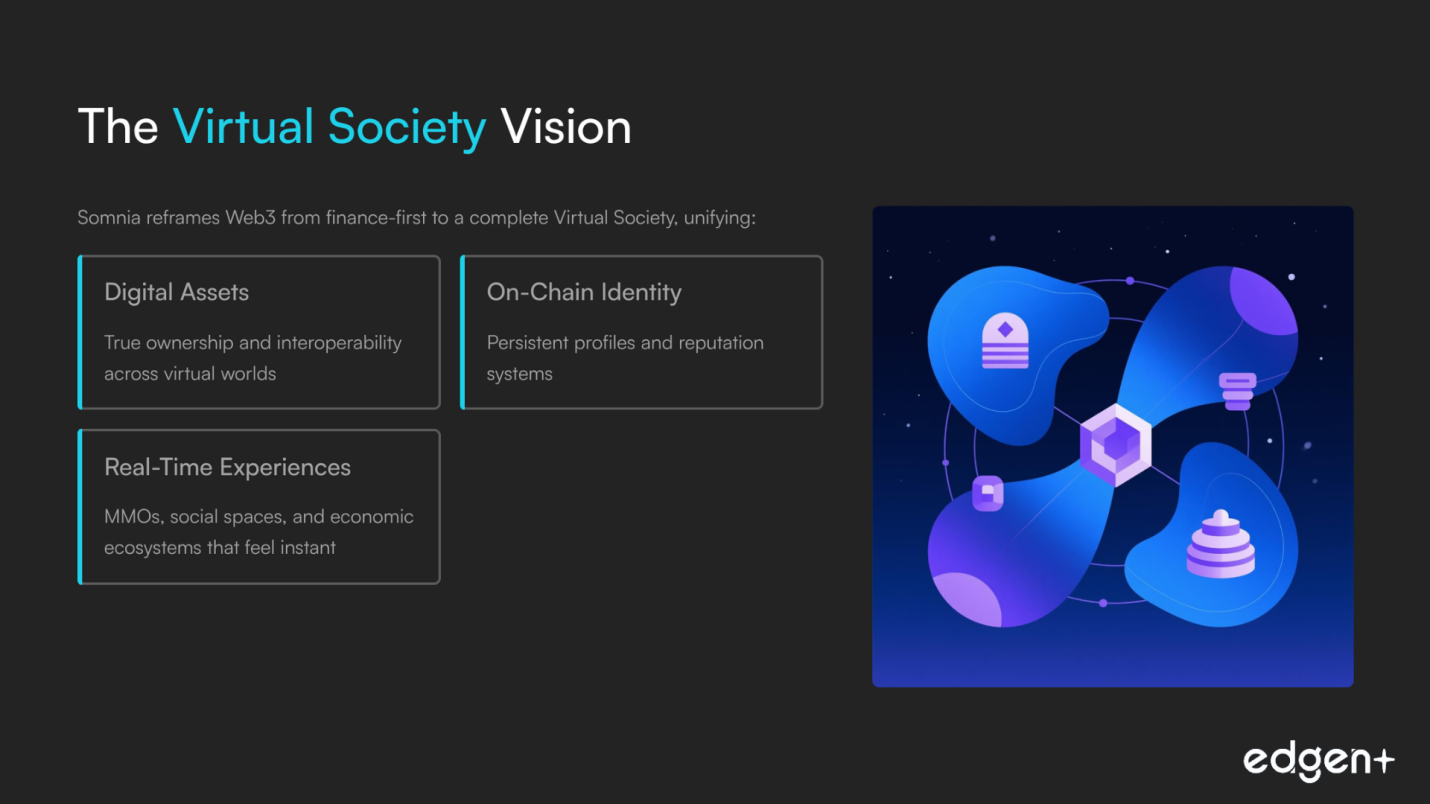
Somnia'nın tezi odaklanmıştır: performansın, gecikmenin ve maliyetin kazananları belirlediği metaverse/sosyal/oyun için uzmanlaşmış L1 olmak. Strateji, Web3'ü finans odaklıdan Sanal Toplum'a yeniden çerçevelendirerek varlıkları, kimliği ve deneyimleri birleştirir. Ortaklıklar (örneğin, Yuga Labs uyumu) ve 10 milyon dolarlık bir hızlandırıcı, içeriğe ve geliştirici başarısına uzun vadeli bağlılığı işaret ediyor.
2) Ekip ve Uygulama Yeteneği

Kurucu Paul Thomas (Improbable), dağıtık sistemler konusunda nadir derinlikte bilgiye sahip; Michelle Kang ise L1/L2 büyüme uzmanlığı katıyor. Altyapı titizliği ile Pazara Giriş (GTM) bilgi birikiminin bu karışımı, karmaşık protokol teslimatını ve ekosistem katılımını destekliyor, bu da yeni bir L1 için çok umut verici.

3) Sermaye ve Onaylar

Somnia, geleneksel yatırım turları yerine Improbable/MSquared aracılığıyla 270 milyon dolara kadar ekosistem fonundan yararlanıyor (yatırımcılar arasında a16z, SoftBank Vision Fund 2, DCG, SIG bulunmaktadır). Google Cloud kurumsal düzeyde doğrulama sağlar (doğrulayıcı + AI/veri/güvenlik), Sequence ve Rarible ise geliştirici ve pazar hazırlığını hızlandırır.

4) Pazar Fırsatı ve Uygunluk

Zincir üstü oyun/metaverse büyük ve genişleyen bir pazardır. Somnia, EVM aşinalığı ile güvenilir, yüksek çekişmeli performansa ihtiyaç duyan geliştiricilere hizmet veriyor, ayrıca hibe, SDK ve dağıtım sağlayarak hem teknik hem de finansal geçiş maliyetlerini düşürüyor.

5) Rekabetçi Konum ve Farklılaştırıcılar

Oyun odaklı EVM zincirleri (Ronin, Immutable zkEVM, GalaChain) ve yüksek verimli L1'ler (Solana, Aptos) ile rekabet ediyor. Farklılaşma: hot-state yürütme odağı, tam EVM, iddialı "Sanal Toplum" anlatısı ve Improbable'dan gelen otantik sanal dünya geçmişi.
Temel değerlendirme: Uyumlu sermaye, güvenilir ortaklar ve gerçek zamanlı, zincir üstü dünyalar için özel olarak tasarlanmış bir yapıyla dikkat çekici temel güce sahip.

II. Lansman Öncesi Ekosistem ve Pazara Giriş

1) Topluluk ve Anlatı Momentum

Testnet ve teşviklerle desteklenen üst hunideki büyüme çok büyük. Şimdiki fırsat, genişliği derinliğe dönüştürmek, iletişimi kurumsallaştırmak, yayınlanan dApp'leri vurgulamak ve topluluk enerjisini ana ağ kullanımına yönlendirmektir.

2) Zincir Üstü Ayak İzi

Testnet etkinliği stres ölçeğinde olmuştur, bu da faydalı bir sistem test alanıdır. TGE sonrası temel KPI, ham işlemler değil, kaliteli kullanım (DAU, elde tutulan cüzdanlar, canlı dApp'ler) olacaktır.

3) Ortaklıklar ve Hazırlık

  • Google Cloud: geliştiriciler için doğrulayıcı + AI/veri/güvenlik entegrasyonu.
  • Sequence: Somnia Builder için akıllı cüzdanlar, Unity/Unreal SDK'ları, pazar yeri yığını.
  • Uprising Labs: yüksek kaliteli oyunları başlatmak için 10 milyon dolarlık Dream Catalyst.
    Bunlar birlikte, koddan kullanıcılara kadar sürtünmeyi azaltır ve ilk günden itibaren içeriği sağlamaya yardımcı olur.

4) Tokenomik ve Değer Birikimi (Bugün)

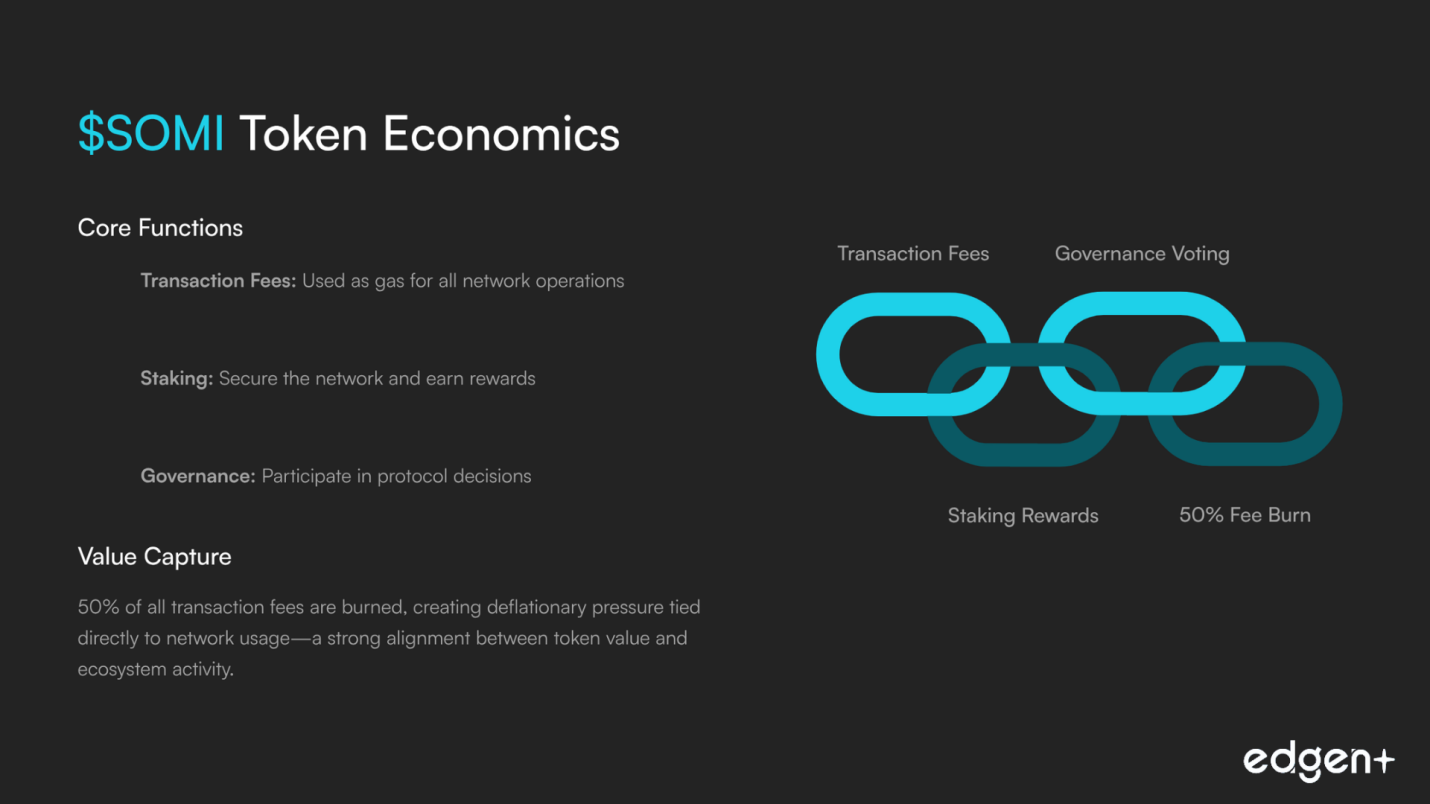
$SOMI: gas, stake, yönetişim. %50 ücret yakımı değeri kullanımla uyumlu hale getirir. Airdrop (arzın %5'i) haftalık ana ağ görevleri aracılığıyla hak kazanır (TGE'de %20 likit; yaklaşık %80'i yaklaşık 60 gün boyunca etkinliğe bağlı olarak kilitli) başlangıçtan itibaren gerçek katılımı teşvik etmek için.
Pazara Giriş (GTM) yorumu: Çok umut verici. Teknoloji yığını, programlar ve ortaklar güçlü geliştirici hızına işaret ediyor; ilk gün güvenini en üst düzeye çıkarmak için lansman operasyonları (saklama/piyasa yapıcı/likidite iletişimi) netleştirilmelidir.

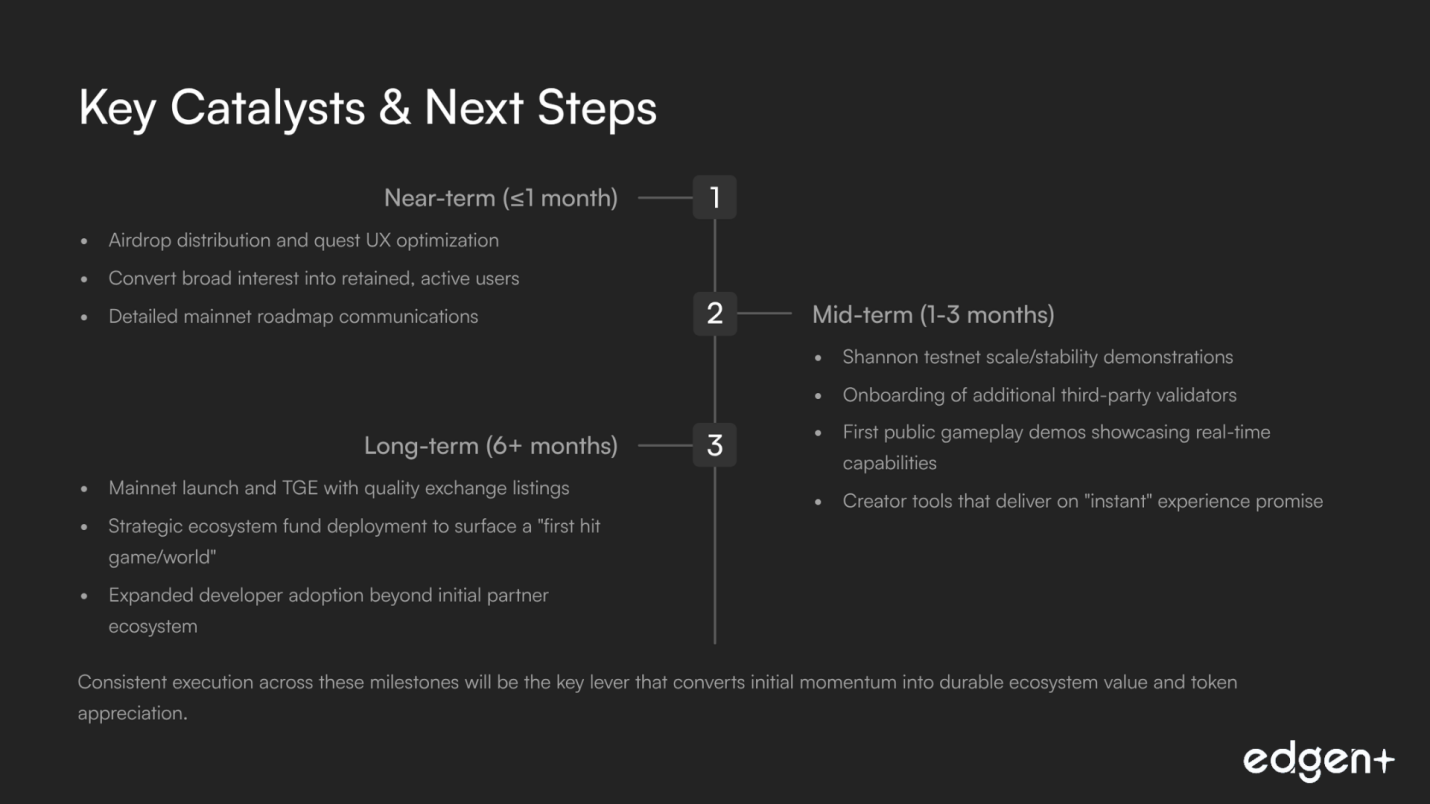
III. İleriye Dönük Analiz (Katalizörler ve Fırsatlar)

Kısa vadeli (≤1 ay):

  • Airdrop öğrenimlerini + kristal netliğinde görev kullanıcı deneyimini iletin. Geniş ilgiyi mutlu, elde tutulan kullanıcılara dönüştürmek, duyarlılığı hızla sıfırlayabilir.

Orta vadeli (1–3 ay):

  • Shannon testnet ölçek/istikrar kanıtı ve daha fazla üçüncü taraf doğrulayıcı; anında hissettiren ilk herkese açık oyun deneyimi ve yaratıcı araçları.

Uzun vadeli (6+ ay):

  • Kaliteli listeleme ve likidite ile Ana Ağ + TGE; "ilk hit oyun/dünya"yı ortaya çıkaran ekosistem fonu dağıtımı.

Yürütme hızı, ivmeyi kalıcı değere dönüştüren kaldıraçtır.

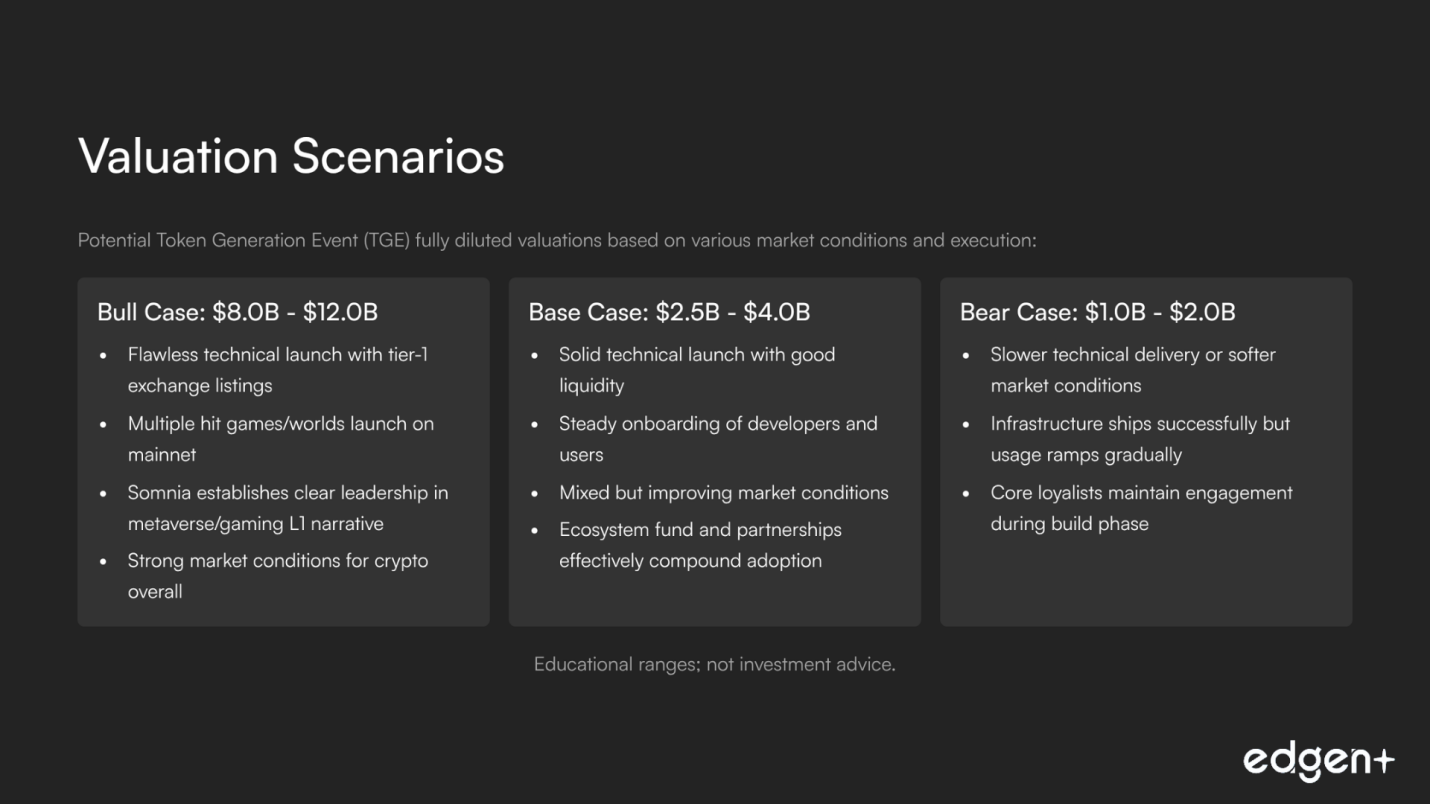
IV. Değerleme Senaryo Analizi (TGE FDV)

Senaryo

FDV (Milyar USD)

Kısa anlatı

Boğa Senaryosu

8.0 – 12.0

Kusursuz lansman + 1. kademe listeleme; hit oyunlar yayına girer; Somnia, metaverse/oyun L1 hikayesine liderlik eder.

Temel Senaryo

2.5 – 4.0

Sağlam teknoloji + karışık bir piyasada istikrarlı kullanıcı katılımı; fon + ortaklar benimsenmeyi hızlandırır.

Ayı Senaryosu

1.0 – 2.0

Daha yavaş teslimat veya daha zayıf pazar; altyapı gönderilir, kullanım temel sadık kullanıcılarla kademeli olarak artar.

Eğitim amaçlı aralıklar; yatırım tavsiyesi değildir.

Rakip Ortamı (TGE anında/yakınındaki token açısından)

Token

Odak Noktası

Somnia'ya Karşı Temel Durum Konumu

Ronin

$RON

Oyun için EVM L1 (yayıncı liderliğinde)

Güçlü kanıtlanmış bir boru hattı; Somnia, daha geniş açık dünya kapsamı ve ham verim hedefleriyle rekabet eder.

Immutable zkEVM

$IMX

Oyunlar için L2, pazar gücü

Derin stüdyolar + altyapı; Somnia, L1 performansı + EVM + ücret yakımı ile karşılık verir.

Solana

$SOL

Yüksek verimli L1 (paralel yürütme)

Olgun ekosistem; Somnia, hot-state performans hikayesi ve EVM aşinalığı ile farklılaşır.

Aptos

$APT

Yüksek verimli L1 (Move)

Güçlü teknoloji; Somnia, EVM + uzmanlaşmış metaverse anlatısı aracılığıyla geliştirici sürtünmesini azaltır.

Sonuç

Somnia çok umut verici görünüyor: gerçek zamanlı, zincir üstü dünyalara güç vermek için gerçekçi bir plana sahip özel, EVM uyumlu bir L1. Önemli ekosistem fonu, büyük ortakları ve hot-state iş yüklerini hedefleyen bir tasarımla, vizyonu kullanıma dönüştürmeye hazırdır. Üst bant değerlemeye giden yol basittir ancak katıdır: kristal netliğinde lansman operasyonları, görünür erken oyunlar, sorunsuz TGE ve tutarlı gönderim.

Eğitim içeriği; finansal tavsiye değildir.

Recommend
Redeem miles for gift cards and each is worth ~1 cent; redeem for long-haul business and they're worth 2.5-4+. With programs now dynamically priced, the one check that decides every redemption.

How to redeem airline miles without wasting them

The single biggest mistake with miles is redeeming them for the easy stuff: gift cards, merchandise, seat upgrades at the gate. Do that and each mile is worth about one cent. Redeem the *same* miles for flights, especially long-haul or premium-cabin flights, and they're often worth two to five cents each, sometimes more. So the real skill isn't earning miles; it's not throwing away their value at the finish line. Here's how to actually use them. A mile has no fixed price; its value depends entirely on what you redeem it for. The way to judge any redemption is simple math: (cash price of the flight) ÷ (miles it costs) = cents per mile. If a flight costs $400 or 20,000 miles, that's 2 cents a mile, a solid deal. If a $90 flight costs 18,000 miles, that's half a cent, which is terrible; pay cash and keep the miles. Run this check before every redemption. It instantly separates a great use from a waste, and it's the one habit that makes miles worth having. As a rule of thumb, most major ai
Edgen
·
Jun 30 2026
Short-term goals (under ~3 years) belong in safe cash; long-term goals (5+ years) can take market risk. The best HYSAs now pay ~4-5% APY. How to sort yours and run both.

Long-term vs short-term financial goals (and how to plan both)

The difference comes down to one thing: time. A short-term goal is money you'll need within roughly three years (an emergency fund, a trip, a wedding, next year's tax bill), so it has to be *safe and reachable*. A long-term goal is five-plus years out (retirement, a house down the road, a kid's education), so it can take market risk, because time smooths the bumps out. Get that match right and you've done most of the work. It's not the size, it's the deadline. A $2,000 goal you need in six months is short-term; a $2,000 goal you won't touch for fifteen years is long-term, and they belong in completely different places. This is the part that actually matters, and where people lose money without realizing it. Short-term money should not be in the stock market. If your emergency fund is in stocks and the market drops 20% the same month your car dies, you're selling at the worst possible time. Short-term goals go somewhere stable and accessible, and a high-yield savings account is the clas
Edgen
·
Jun 30 2026
Mortgages near 6.5%, home prices flat, and the Fed split on rate cuts vs hikes. With timing a coin flip, the 3 questions that actually decide whether to buy now or wait.

Should you buy a house now or wait? How to actually decide

The honest answer: buy when you'll stay put for at least five years and you'll still have an emergency fund left after the down payment. Otherwise, waiting (and renting) is often the smarter money move, not the weaker one. "Rent vs buy" isn't a math problem with one right answer, and it's almost never really about timing the market. It's about your *life*, in three questions. Before the three questions, here's the mid-2026 backdrop — because "now or wait" usually hides a bet on rates and prices, and the data says that bet is a coin flip. The picture: mortgages are still pricey, prices have gone flat (more than half of the 20 big metros saw year-over-year declines in March), and the cheap-money era hasn't returned. So "buy before it runs away" and "wait for the crash" are *both* weak arguments right now. The whole "wait for rates to drop" plan rests on the Fed, and the Fed is split down the middle. In its June 2026 projections, policymakers were divided: 8 expected no change this year,
Edgen
·
Jun 30 2026
Most financial goals fail because they're wishes, not systems. Here's the 3-part anatomy of a goal that sticks (a number, a date, one automatic move), plus why 37% of adults can't cover a $400 surprise.

How to set financial goals you'll actually hit

A financial goal you'll actually hit has three things a vague wish doesn't: a number, a date, and one automatic move that happens whether or not you remember it. "Save more" is a wish. "$6,000 in a separate account by next December, $500 auto-transferred on payday" is a goal. The gap between those two sentences is the reason most goals quietly die, and it has almost nothing to do with willpower. Key Takeaways A real financial goal answers three questions: how much, by when, and what for. Drop any one and it stops working. "Pay off debt" has no number and no date, so there's nothing to aim at or measure, while "$8,000 of card debt cleared in 18 months" tells you exactly whether you're on track and the day you're done. The "what for" matters more than people expect. A goal tied to something real (a buffer so a bad month isn't a crisis, a deposit on a first place) survives the months when motivation dips. In our experience reading how people actually use a money tool, the goals that get
Edgen
·
Jun 30 2026
A big RSU grant just vested — now what? Here's what a modern money tool actually surfaces first, using Ed as a worked example: a reality check, the 22% tax gap most high earners miss, and the concentration risk nobody flags.

Your RSUs Just Vested. Here's What a Money Tool Surfaces First.

You just had a big RSU grant vest. Congratulations — and now the awkward part: a six-figure pile of your own company's stock, a vague sense you should "do something," and no one actually telling you what. An advisor, a spreadsheet, and a piece of software each handle this moment differently. Here's what a modern money tool surfaces in a moment like this — using Ed as a worked example — so you can decide what kind of help actually fits. Key takeaways You connect your brokerage and bank through read-only aggregation, so the tool can read balances but can't move a dollar. Ed's framing is simple: precise about your money, blind to your identity. Instead of sorting your lattes into categories, Ed opens on a single Financial Reality Check — a read on whether your money could survive a bad month. For a lot of high earners, that one number lands harder than any budget, because it answers a question the other apps never ask. (If the Reality Check is the numbers side, your money type is the beha
Edgen
·
Jun 26 2026
A money personality test is more than a quiz if it measures behavior, not just vibes. Here's the science behind money types, how Ed's test works, and how to use your result.

What Is a Money Personality Test? The Science Behind Your Money Type

The short version: a good money personality test should feel like a roast and work like a mirror — fun on the surface, behavioral underneath. The useful ones don't tell you what you know; they show you how you act with money, and the one blind spot worth watching. Key takeaways Here's the uncomfortable backdrop. U.S. financial literacy has been stuck for a decade — adults answer only about 49% of the standard knowledge questions correctly, essentially flat since 2017 (TIAA Institute–GFLEC, 2025) — even as free financial information became infinite. If facts fixed money, they'd have fixed it by now. They don't, because the thing that actually drives your outcomes lives one level below the facts: how you're wired to behave when money is on the line. That's the whole premise of financial fitness — and it's what a money personality test is built to surface. Not what you know. What you do. The idea has real research behind it — money behavior is patterned and measurable, and a few tradition
Edgen
·
Jun 23 2026
A financial reality check scores where you actually stand across safety, control, progress, upside, and Mental Load. Here's why a money score matters, how Ed's checkup works, and what to do with your weakest area.

What Is a Financial Reality Check? Why Your Credit Score Isn't Enough

The short version: your credit score measures how safe you are to lend to. Almost nobody has ever seen the number that measures whether you are actually secure. A financial reality check is that second number. Key takeaways Ask people for their credit score and many can recite it. Ask whether they could survive three months without income, or where their money quietly leaks each month, and you get a shrug. That's the gap. A credit score answers a lender's question — how risky is it to extend this person debt? It can be high while your life is fragile, or low while you're genuinely fine, because it was never built to measure you. A financial reality check answers the question the credit score ignores: are you safe, clear, progressing, building, and at ease? Here's the simple version, with the research behind each axis.
Edgen
·
Jun 23 2026
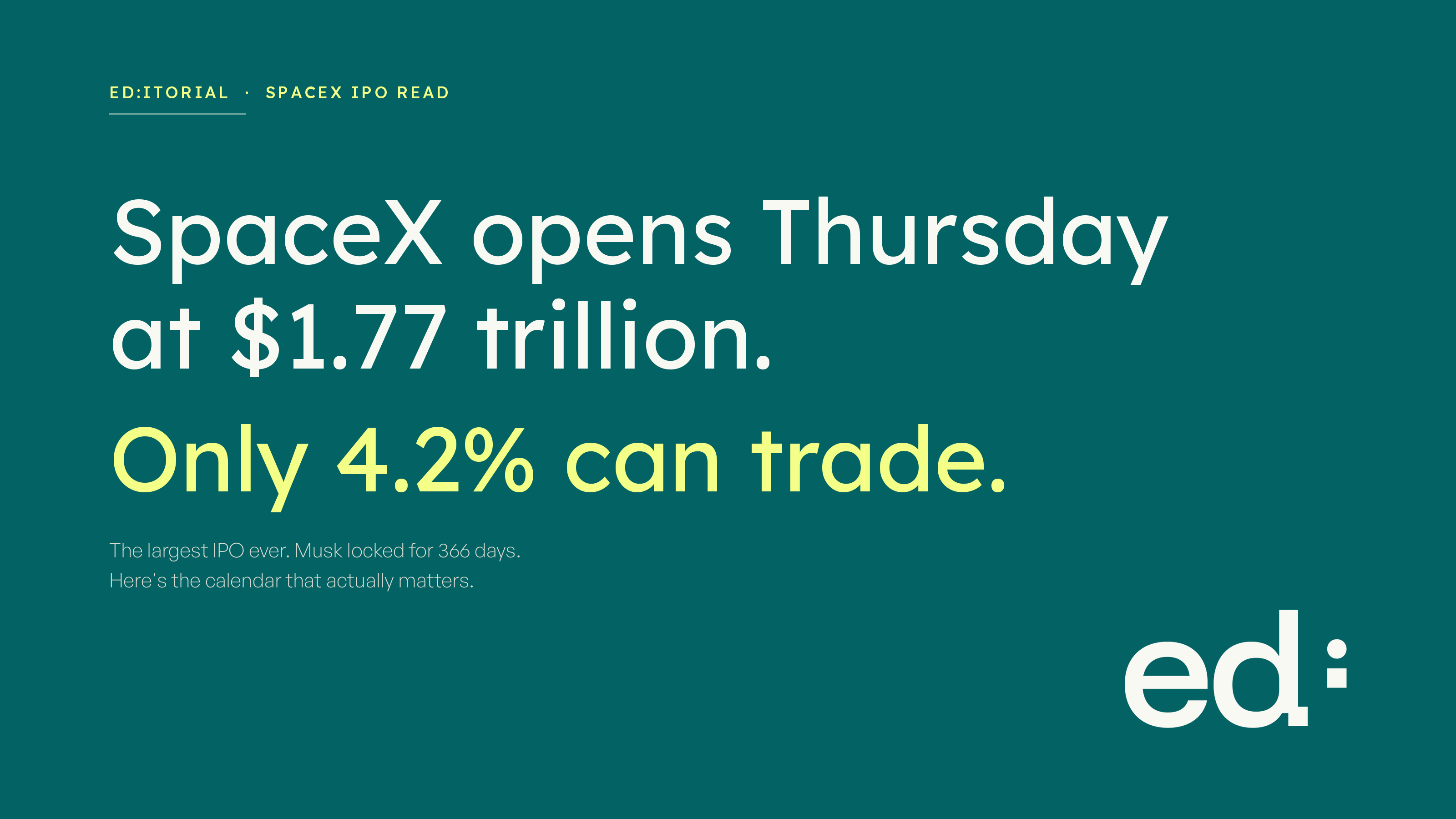
SpaceX opens Thursday at a $1.77 trillion valuation — the largest IPO ever. Only 4.2% of stock actually trades. Musk is locked up for 366 days. The next 366 days run on an unusually clean calendar of supply releases. Here are the 13 dates worth watching.

SpaceX goes public Thursday with a possible $5 trillion hit. Here's the calendar that actually matters.

SpaceX prices Wednesday night and opens Thursday on Nasdaq at $135 per share — a $1.77 trillion valuation, the largest IPO ever. Most coverage will frame what comes next as a sentiment trade, an Elon story, or a race to Goldman's $5 trillion bull case. The reality is more grounded and more useful: the next 366 days are governed by an unusually clean calendar of supply releases — when 95.8% of the company can or cannot trade, when index funds add weight, when the lock-up cliff arrives, when Musk himself becomes a potential seller for the first time. Read the calendar and you've already understood the structure most market commentary will spend the next quarter trying to explain. Here are the 13 dates worth watching. Two things keep showing up in headlines that don't survive a careful read. The first is the idea that index funds are about to be forced into a massive single-event SpaceX buy. They aren't. Nasdaq did create a fast-track inclusion rule that lets SpaceX join the Nasdaq 100 wi
Edgen
·
Jun 10 2026

Yatırım yapmak artık yalnız bir iş değil.

Ed'i ücretsiz dene. Kart yok, taahhüt yok.